

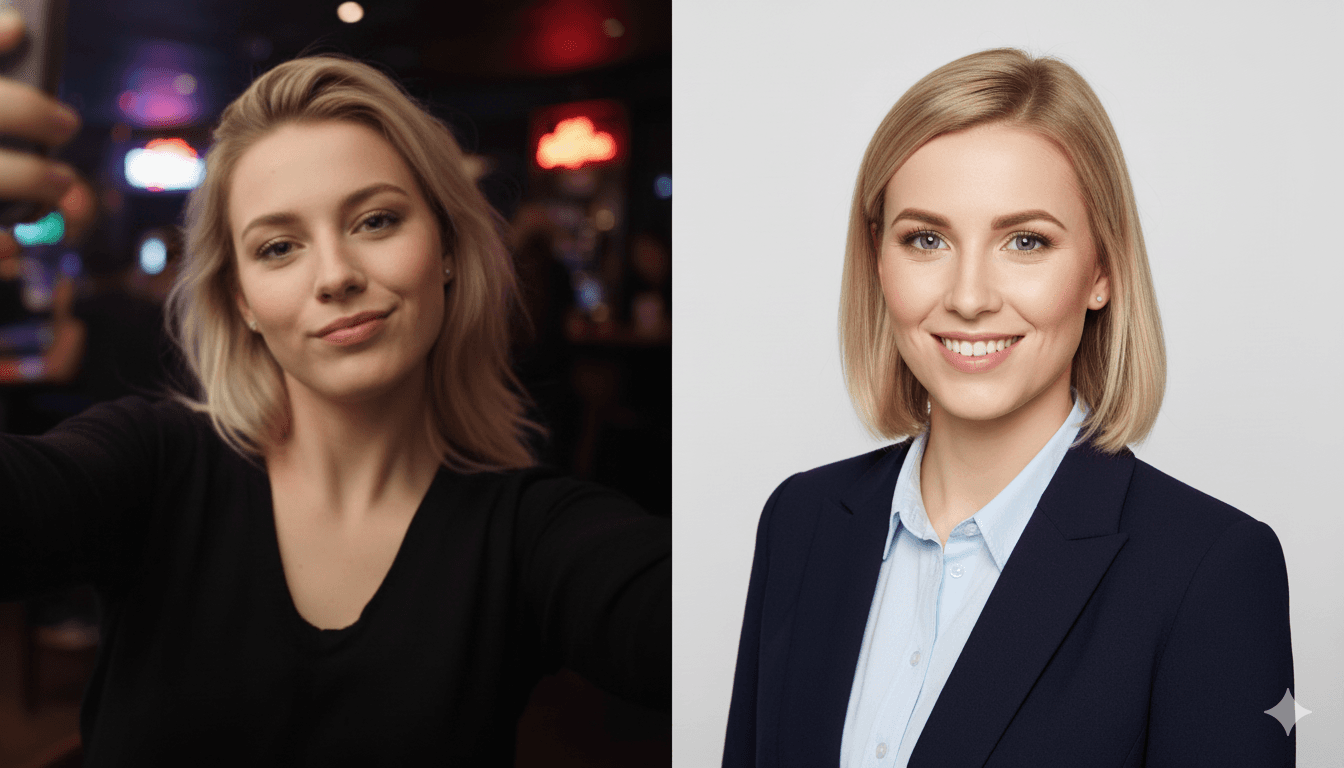
We've all seen them. The car selfie. The bathroom mirror shot. The "cropped arm of my partner" photo. In the world of social media, these are fine. But on LinkedIn, on your resume, or on your company website, they are career kryptonite.
There is a massive chasm between a Do-It-Yourself (DIY) selfie and a professional headshot. In the past, crossing that chasm cost $500. Today, thanks to CareerLyft.ai, it costs less than a pizza.
Let's analyze why selfies fail and why AI headshots are the mandatory upgrade for 2026.
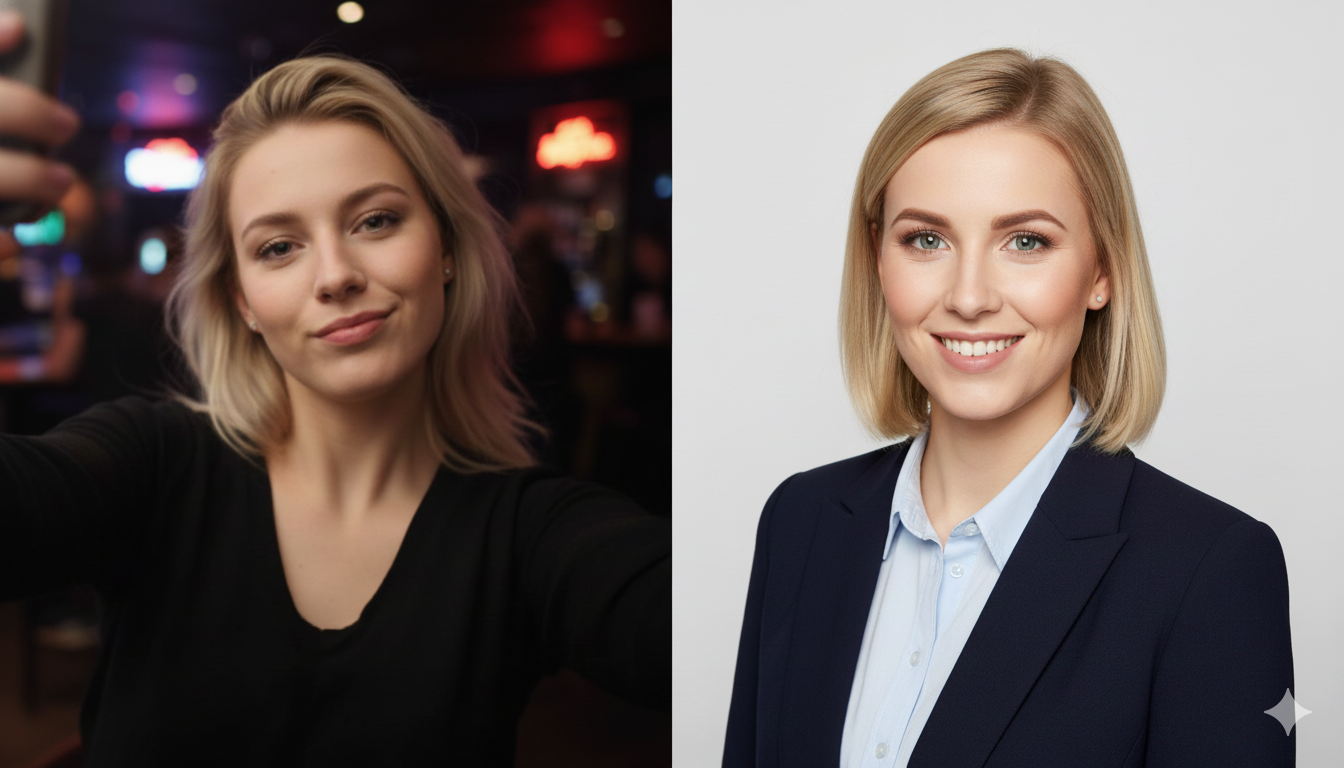
The Anatomy of a Selfie vs. an AI Headshot
To the untrained eye, a photo is a photo. But subconsciously, we pick up on dozens of cues that signal "amateur" or "pro."
1. The Lens Distortion Problem
- Selfie: Phone cameras use wide-angle lenses. When you hold the phone at arm's length, it distorts your facial features—your nose looks bigger, your ears look further back, and your face looks "bulbous."
- AI Headshot: AI models simulate the focal length of professional portrait lenses (typically 85mm or 100mm). This flattens the features in a flattering way, making you look like you, not a fish-eye version of you.
2. Lighting: The Difference Between Dull and Dynamic
- Selfie: Usually taken with flat, harsh overhead lighting or uneven window light. This creates unflattering shadows under the eyes (raccoon eyes) or highlights oily skin.
- AI Headshot: The AI virtually "relights" your face. It simulates softboxes, rim lights (for that halo effect on the hair), and fill lights. It sculpts your face, highlighting your cheekbones and jawline while smoothing imperfections.
3. Background Noise vs. Focus
- Selfie: Cluttered backgrounds (messy rooms, cars, random people) distract the viewer. Even "Portrait Mode" on phones often fails to blur hair correctly, looking artificial.
- AI Headshot: Provides clean, intentional backgrounds. Whether it's a solid color, a textured wall, or a blurred office, the background serves one purpose: to make you pop.
4. Angle and Posture
- Selfie: The "high angle" look is great for Instagram but looks juvenile in business. The "low angle" (laptop camera) looks intimidating and unflattering.
- AI Headshot: Simulates a camera at eye level, the standard for professional connection. It also corrects your posture, making you look upright and confident, even if you were slouching in the original photo.
The Perception Gap
Beyond the technical pixels, what does each photo say?
The Message of a Selfie:
- "I didn't prepare for this."
- "I don't have resources."
- "I don't understand professional norms."
- "I am casual."
The Message of an AI Headshot:
- "I invest in myself."
- "I pay attention to detail."
- "I am ready for business."
- "I am competent."
The "Good Enough" Trap
Many people think, "My phone camera is 48 megapixels, it's good enough." But resolution is not quality. A high-resolution photo of a bad angle with bad lighting is just a high-definition bad photo.
CareerLyft.ai takes the data from your selfies (your facial features) and reconstructs them in a professional studio context. It keeps the essence of you but upgrades the production value to Hollywood standards.
Case Study: The Recruiter's Eye
Imagine a recruiter has 10 seconds to scan a profile.
- Candidate A: blurry photo, clearly cropped from a group shot at a wedding.
- Candidate B: crisp, clear, well-lit professional headshot.
Who gets the extra 10 seconds of attention? Who gets the benefit of the doubt? It's almost always Candidate B. It's not fair, but it's human nature.
Conclusion: Respect Your Brand
You wouldn't wear sweatpants to an interview. Why would you wear a digital equivalent on your profile?
Upgrading from a selfie to an AI headshot is the single easiest, highest-ROI action you can take for your professional presence today. Stop settling for "good enough" and start looking like the leader you are.
Ditch the selfie. Get the shot. Upgrade to a professional AI headshot with CareerLyft.ai
Learn more about image psychology: