

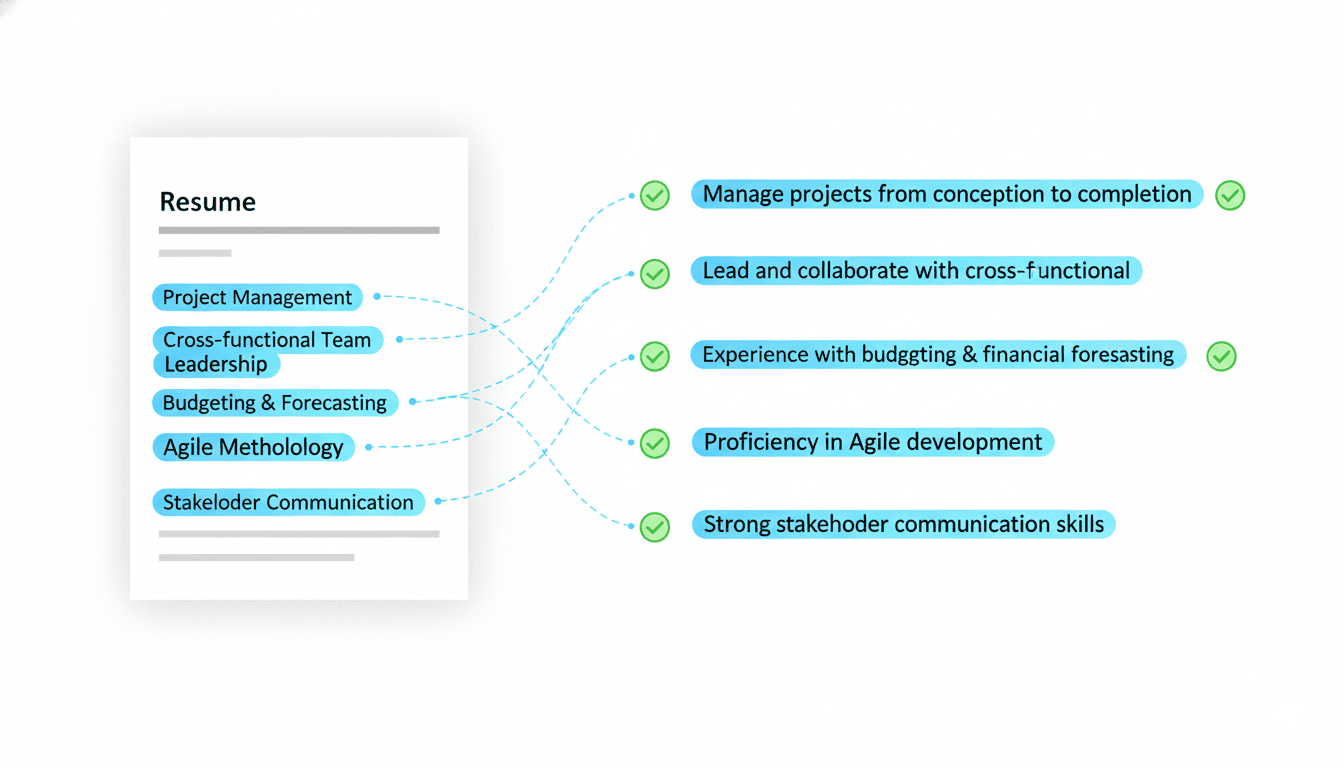
If your resume does not include the right keywords, it does not matter how talented you are. In 2026, most employers rely on ATS filtering to narrow applicant pools. Keyword strategy is no longer optional. It is the difference between visibility and invisibility.
AI resume builders are the fastest way to build a keyword-rich resume, but they only work if you understand keyword strategy. This guide explains how to identify the right keywords, where to place them, and how to avoid the common mistakes that make resumes look spammy or generic.
What Resume Keywords Actually Are
Keywords are not just tools or certifications. They are the language of the role. They include:
- Job titles and role synonyms.
- Core responsibilities and processes.
- Tools, platforms, and methodologies.
- Business outcomes and metrics.
- Soft skills that are explicitly mentioned in the job description.
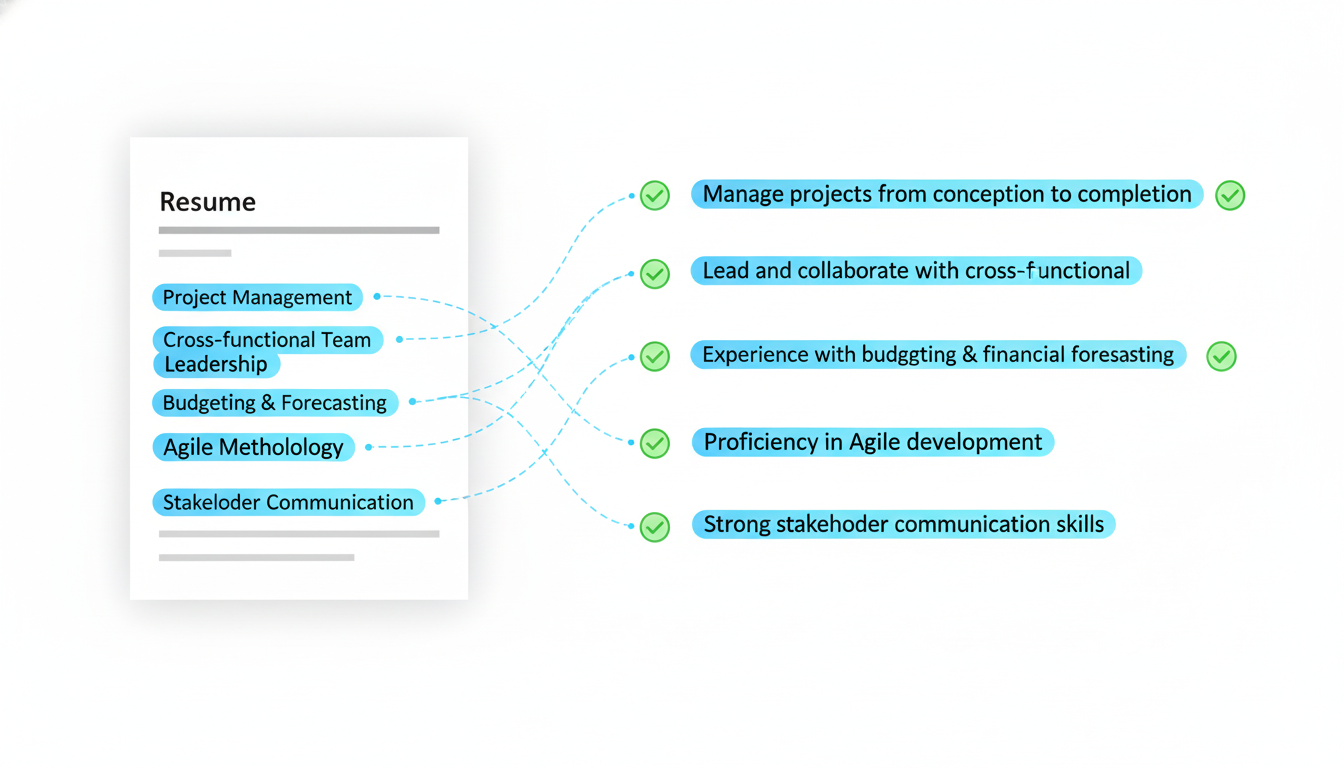
If the job post says "stakeholder management," your resume should say "stakeholder management." If it says "customer lifecycle," your resume should include that phrase, not just "customer success."
Build a Keyword Universe Before You Write
Start with a broad keyword universe, then narrow it to the most important terms. Use AI to extract and rank keywords from three sources:
- The target job description.
- Similar job descriptions from the same role.
- Industry-specific keyword lists or profiles.
Then categorize the keywords:
- Must-have keywords: required skills, core tools, and main responsibilities.
- Nice-to-have keywords: secondary tools, optional certifications.
- Outcome keywords: metrics like revenue, retention, efficiency, or compliance.
This organized list becomes your blueprint.
Where Keywords Carry the Most Weight
Not all placement is equal. Keywords in the experience section are more powerful because they are tied to real outcomes. Keywords in the summary and skills section are still valuable, but they are only part of the equation.
A high-performing placement strategy:
- Summary: use the job title, 2 to 3 core skills, and one key outcome term.
- Skills section: list tools, platforms, and technical keywords.
- Experience bullets: weave in core skills, tools, and outcomes together.
This placement mirrors how recruiters scan: summary first, skills second, experience last but most influential.
Long-Tail Keywords: The ATS Advantage
Long-tail keywords are specific phrases that reflect how roles are described in 2026. They are less competitive and more precise. Examples:
- "Remote team management" instead of just "management."
- "B2B SaaS pipeline development" instead of "sales."
- "HIPAA compliance documentation" instead of "compliance."
AI can suggest long-tail keywords by analyzing top-performing job descriptions and recent hiring patterns. These terms can push your resume above generic applicants who only use broad keywords.
Avoid Keyword Stuffing
Keyword stuffing is a fast way to lose credibility. It makes your resume read like a robot and can lower your chances with human reviewers. The solution is to place keywords in context.
Instead of a skills list that says:
"Leadership, Leadership, Leadership."
Use:
"Led a cross-functional team of 8 to launch a new onboarding workflow, reducing time-to-productivity by 25 percent."
This delivers the keyword and the evidence at the same time.
Use AI to Translate Your Past Experience Into the New Language
Many professionals have the right skills but use outdated or internal company language. AI can translate this language into more market-recognized terms.
Example:
"Built internal dashboards in our data tool" becomes "Designed executive dashboards in Tableau and Looker to improve weekly performance review cadence."
The same work becomes more recognizable and keyword rich. This translation is crucial for ATS success.
Keyword Strategy by Industry
Keyword strategy is not one-size-fits-all. In 2026, each industry has its own language.
- Tech: focus on tools, architecture, and scalability terms.
- Marketing: emphasize channels, attribution, lifecycle, and ROI metrics.
- Finance: highlight compliance, forecasting, and risk mitigation.
- Healthcare: use regulatory and patient outcomes language.
- Operations: focus on process improvement, efficiency, and automation.
AI can help you tailor your keyword set to match the domain, but you must verify relevance.
Build a Skills Matrix, Not a Keyword List
A skills matrix organizes keywords into categories and shows depth. It helps recruiters understand your capabilities at a glance and helps ATS parse your resume more accurately.
Example categories:
- Technical: SQL, Python, Tableau, Power BI.
- Process: Lean Six Sigma, process mapping, automation.
- Leadership: stakeholder management, team coaching, change management.
- Domain: healthcare analytics, supply chain optimization.
When you structure skills this way, you increase both readability and relevance.
The Keyword Validation Step Most People Skip
Before you submit, validate your keyword coverage. The fastest method is to use AI to compare your resume against the job description and flag missing terms. If a core keyword is missing, decide where it belongs.
Do not add it blindly. Add it where it naturally fits. The goal is a resume that reads cleanly while matching the job description language.
Keyword Strategy for Career Changers
If you are pivoting, keyword strategy becomes even more important. You must map transferable skills to the target role language. AI can help you reframe experience, but the intent must be yours.
Example: A teacher moving into learning and development might map "curriculum design" to "learning program development" and "classroom management" to "facilitated group training."
This translation is what gets your resume through ATS and into human review.
Keyword Strategy for Promotions and Internal Transfers
If you are applying internally, your keywords should reflect the new role, not your current role. Internal job descriptions still feed ATS systems, and internal recruiters still scan for relevance.
Update your resume with the same care you would use for an external role. AI makes it fast, but you must prioritize the new role language.
A Practical Keyword Research Workflow
If you want keyword strategy to feel repeatable, use this simple workflow:
- Collect three to five job descriptions for the same role.
- Use AI to extract the top 20 to 30 keywords from each.
- Combine and deduplicate the list.
- Group terms into categories: tools, responsibilities, outcomes, and soft skills.
- Choose the top 10 to 15 that appear most frequently and align with your experience.
This method creates a keyword set that is both broad and accurate. It also helps you avoid overfitting to a single job description.
Placement Examples by Resume Section
Keyword placement can be tricky. Here are examples of how to place keywords in each section without sounding robotic.
- Summary: "Data analyst with 4 years of experience in SQL, Tableau, and predictive modeling, delivering 20 percent improvements in forecasting accuracy."
- Skills: "SQL, Python, Tableau, Power BI, A/B testing, predictive analytics."
- Experience: "Built predictive models in Python that reduced churn by 12 percent and improved retention forecasting."
Notice that the keywords appear in different contexts. This improves ATS scores while keeping the resume readable.
Negative Keywords and Red Flags
Some words can hurt your alignment. If the job description does not mention a tool or framework, adding it can dilute relevance. If a term is outdated, it can signal that your skills are not current.
Examples:
- Listing legacy tools that are no longer used in your industry.
- Using outdated titles that no longer appear in job descriptions.
- Highlighting unrelated certifications in the skills section.
Use AI to flag potential red flags by comparing your resume to the target role. Then decide whether each term adds or removes value.
Build a Keyword Tracking Sheet
The best candidates treat keyword strategy like a mini project. A simple tracking sheet can help:
- Column 1: keyword.
- Column 2: frequency in job postings.
- Column 3: where it appears in your resume.
- Column 4: evidence or example.
This keeps your resume honest. You can see which keywords you have used, where they appear, and whether you have evidence to support them.
A Mini Case Study: Keyword Strategy in Action
A project manager applied for a "Technical Program Manager" role but kept getting filtered out. The job description emphasized "risk management," "cross-functional alignment," and "roadmap execution." Their resume used phrases like "project coordination" and "team communication" instead.
After using AI to map keywords, they updated their bullets:
- "Led cross-functional alignment across product, engineering, and design to deliver roadmap milestones on time."
- "Implemented risk management practices that reduced delivery delays by 15 percent."
The resume now matched the job description language, and the candidate moved from no responses to multiple interviews. The skills did not change, the language did.
Common Keyword Mistakes to Avoid
Avoid these traps:
- Using acronyms without spelling them out at least once.
- Listing tools you have not used in years.
- Overloading the skills section and underwriting the experience section.
- Copying entire job description lines without customizing.
The best keyword strategy is accurate, contextual, and aligned with your actual experience.
Frequently Asked Questions
How many keywords should my resume include?
There is no exact number, but your resume should naturally include all critical terms from the job description. Focus on quality and placement, not raw quantity.
Do synonyms help?
Yes. ATS systems are better at synonyms than they used to be, but matching the exact language from the job description is still the safest approach. Use both when possible.
Should I repeat keywords in multiple sections?
Yes, but sparingly. Repeating a core keyword in the summary and a related experience bullet is usually enough. Avoid repeating it in every bullet.
Can AI do the keyword work for me?
AI can extract and suggest keywords, but you must validate relevance and accuracy. You are responsible for the truth of the content.
How does CareerLyft support keyword strategy?
CareerLyft analyzes job descriptions, highlights high-value keywords, and helps you place them in an ATS-friendly structure. Its one-time payment model starting at $1.99 makes it easy to tailor resumes without ongoing subscription costs.
Final Takeaway: Keyword Strategy Is the Resume Skill of 2026
Your resume is no longer judged solely by humans. ATS systems filter first, and keywords are the filters. A modern resume keyword strategy uses AI to extract the right language, place it in the right sections, and keep the narrative credible and human.
If you want to rank higher in ATS and stand out to recruiters, build your keyword strategy with intention, and use AI to execute it quickly.