

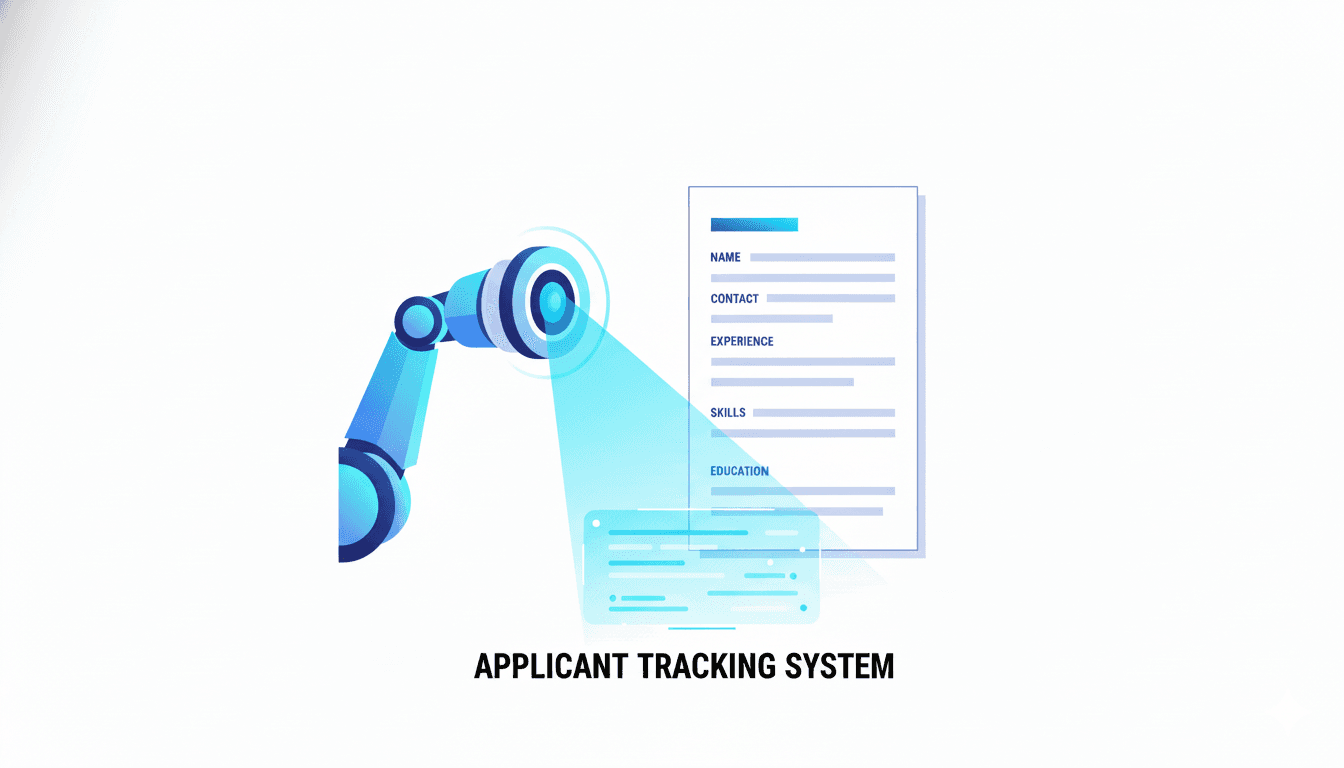
Applicant Tracking Systems are not going away. In 2026, they are smarter, faster, and more consistent than ever. That means your resume must be built for two audiences at once: a machine that parses text and a human who makes the final call. If you ignore either one, you lose.
An AI resume builder can dramatically improve ATS performance, but only if you understand how ATS systems actually work. This blueprint explains the mechanics, the strategy, and the exact steps to create a resume that passes automated filters and still reads like a strong professional narrative.
How ATS Systems Parse Resumes in 2026
ATS software reads your resume as a structured text file. It looks for clear section headings, consistent dates, and standard formatting. If your resume uses columns, text boxes, or unusual fonts, the parser can scramble the content.
Modern ATS tools also apply weighted keyword scoring. They evaluate how often you use relevant terms, where they appear, and whether they match the job description. Some systems score keywords in the experience section higher than keywords in the skills section. This is why placement matters as much as inclusion.
The conclusion is simple: an ATS-friendly resume is not a design project. It is an information architecture problem.
The Three ATS Ranking Signals That Matter Most
In practice, most ATS systems evaluate resumes using three signal types:
- Keyword relevance: do your skills and experience match the job description language?
- Contextual alignment: are keywords used in credible, contextual sentences rather than stuffed lists?
- Structure and readability: can the parser reliably identify sections and timeline?
You can fix all three with an AI resume builder, but only if you use it intentionally.
Step One: Build a Keyword Map
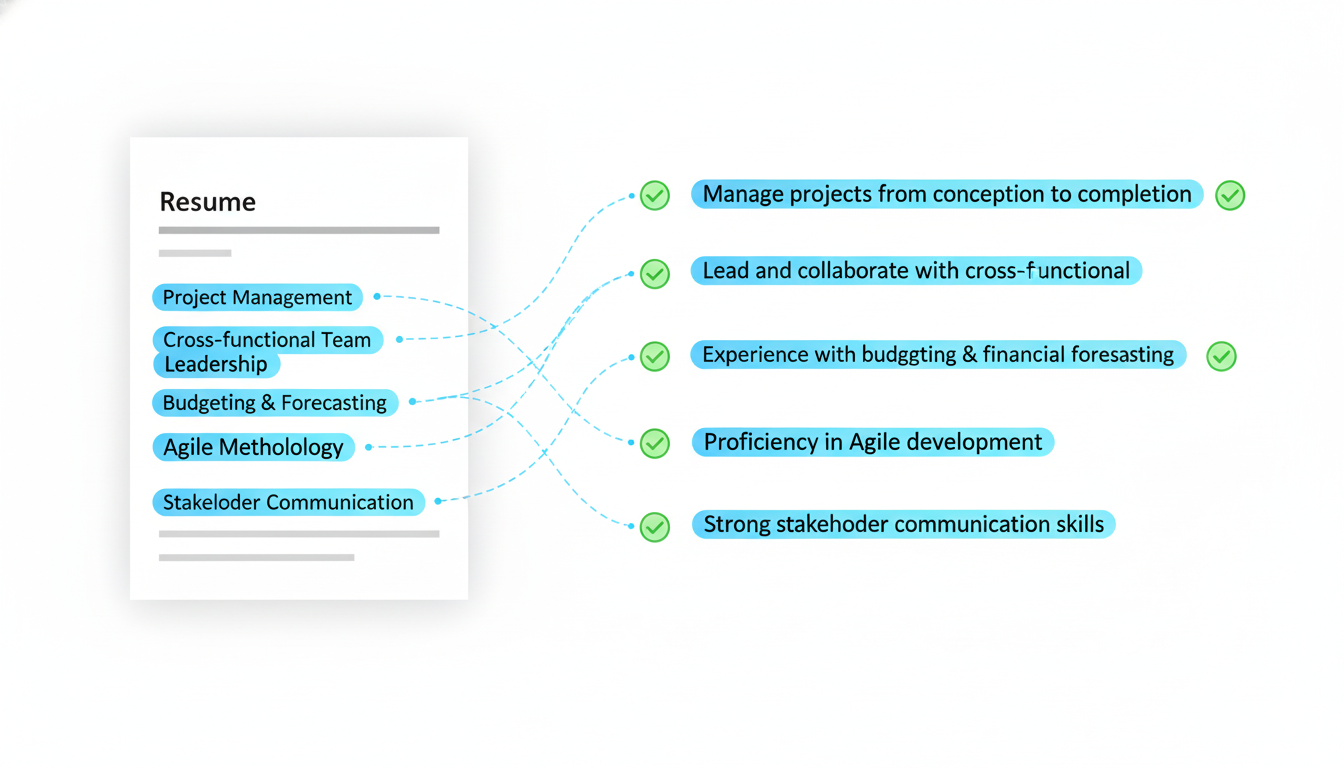
Keyword mapping is the backbone of ATS optimization. The fastest method is to paste the job description into your AI builder and extract the top terms. Then classify them into categories:
- Role keywords: titles, role-specific phrases, and core responsibilities.
- Tool keywords: software, platforms, or frameworks.
- Outcome keywords: metrics, KPIs, and business results.
- Soft skill keywords: collaboration, leadership, communication, and stakeholder management.
This map becomes your checklist. Every category should appear somewhere in your resume, ideally in more than one section.
Step Two: Place Keywords Where They Carry Weight
A common mistake is to dump keywords in the skills section. That helps, but it is not enough. ATS systems often assign more value to keywords inside experience bullets because that context suggests real usage.
A stronger approach:
- Use core keywords in the summary and skills section.
- Use tool and outcome keywords inside experience bullets.
- Use soft skills only when they are demonstrated with outcomes.
This placement strategy can raise your ATS score without making the resume feel robotic.
Step Three: Format for the Parser, Not the Designer
ATS-friendly formatting still follows old rules:
- Use a single-column layout.
- Use standard section headings like "Experience," "Skills," "Education."
- Avoid graphics, tables, or text boxes.
- Keep dates consistent and easy to parse.
AI resume builders like CareerLyft are built to avoid formatting errors. They output clean structures that parse correctly and still look modern to a human reviewer.
Step Four: Write Bullets With Contextual Keywords
Contextual keywords are more powerful than isolated ones. If the job description mentions "cross-functional collaboration," then a bullet that says "Collaborated cross-functionally with product and engineering" is far stronger than just listing "cross-functional collaboration" in skills.
AI can help you generate these bullets quickly. The key is to validate the accuracy and add metrics where possible. A strong bullet includes:
- Action verb.
- Scope of responsibility.
- Result or metric.
Example:
"Coordinated cross-functional launch planning across product, marketing, and sales, reducing time-to-market by 20 percent."
This bullet includes the keyword and a result, which improves both ATS score and human perception.
Step Five: Choose the Right File Type
Many ATS systems still read .docx files more reliably than PDFs, although this varies by company. The safest approach is to submit the file type requested in the job application. If the application does not specify, a clean PDF is usually fine.
AI builders can export both formats. Use PDF for readability when you are confident in parsing, and use .docx when you want maximum compatibility. If in doubt, test both formats using a free ATS scanner.
The Role of Resume Length in ATS Scoring
ATS systems are not sensitive to length, but recruiters are. In 2026, the standard is still:
- One page for early career and recent graduates.
- Two pages for experienced professionals and managers.
AI can generate long drafts. Your job is to tighten them. Remove bullets that are not relevant to the target role. Relevance is the only reason to keep a line.
Tailoring at Scale Without Sacrificing Quality
The ATS rewards alignment with each job description. That means tailoring is essential. AI makes it fast.
A simple workflow:
- Save a master resume.
- Create a tailored version for each role type.
- For each application, update the summary, skills order, and top 4 bullets.
This approach keeps quality high while making it possible to apply quickly.
Common ATS Mistakes That AI Can Prevent
AI is particularly effective at avoiding common ATS errors, including:
- Missing section headings.
- Inconsistent date formatting.
- Overuse of acronyms without spelling them out.
- Keyword gaps due to unfamiliar job description language.
However, AI can also introduce errors if you accept every suggestion without review. Always read the final output to confirm accuracy.
ATS Optimization for Different Industries
ATS scoring varies by industry. Use AI to adjust language for the domain:
- Tech: emphasize tools, systems, and project outcomes.
- Marketing: highlight campaign metrics, attribution, and revenue impact.
- Finance: include compliance, forecasting, and risk management keywords.
- Healthcare: use terminology related to patient outcomes, clinical systems, and regulations.
The more precise the language, the stronger the ATS match.
How to Test ATS Readability Before You Apply
Many candidates submit resumes without ever checking how they parse. You can avoid this by doing a quick ATS readability test. The simplest method is to copy your resume content into a plain text file and scan for weird ordering or missing sections. If the text looks scrambled, the ATS will struggle too.
You can also use free ATS scanners that simulate parsing and keyword scoring. These tools are not perfect, but they reveal major issues like missing headings, incorrect date formats, or keyword gaps. Use AI to fix the issues quickly, then re-test. This feedback loop is one of the fastest ways to improve ATS performance.
Keyword Density and Semantic Matching
Modern ATS systems do not just count keywords. They evaluate semantic matches, which means related terms and contextual usage matter. That is why synonyms can help, but exact matches still carry weight.
A practical approach:
- Use exact matches for the top 5 to 10 terms from the job description.
- Use synonyms in supporting bullets to reinforce relevance.
- Avoid repeating the same keyword in every bullet, which can look unnatural.
AI can suggest keyword variations, but you should place them intentionally. This creates a resume that feels human while still matching ATS scoring rules.
International and Multi-Language ATS Considerations
If you apply across different countries, ATS expectations can vary. Some regions prefer longer CVs, while others expect a concise resume. Use AI to create region-specific versions:
- United States: one to two pages, high emphasis on impact.
- Europe: sometimes longer, with more detail on education and certifications.
- UK: often expects a concise CV but includes summary statements.
If the job description is not in English, use the local language terms for keywords. ATS systems are language specific, and keyword matching works best when the resume matches the posting language.
File Naming, Metadata, and Submission Hygiene
Small details matter more than most people realize. A professional file name improves clarity for recruiters:
- "FirstName_LastName_Role_2026.pdf"
Avoid generic file names like "resume_final_v3.pdf." Also check the file metadata to ensure your name appears correctly in the document properties. This is minor, but it signals professionalism.
A Mini Case Study: ATS Optimization in Action
Consider a candidate applying for a "Customer Success Manager" role. Their original resume used terms like "client support" and "account servicing." The ATS score was low because the job description emphasized "renewals," "retention," and "expansion."
After AI analysis, the candidate updated their bullets:
- "Managed renewals for 120 accounts, achieving 94 percent retention."
- "Expanded ARR by 18 percent through proactive lifecycle engagement."
The resume now aligned with the ATS language and scored much higher. The candidate received an interview within a week. The experience did not change, but the language did.
A Quick ATS Pre-Submission Checklist
Before you submit, check these items:
- The job title in the summary matches the job title in the posting.
- The top 10 keywords appear naturally across summary, skills, and experience.
- The resume is in one column and avoids graphics.
- Dates are consistent and easy to parse.
- Each role includes at least one quantified outcome.
If all five are true, your ATS score will be strong.
Frequently Asked Questions
Does ATS penalize AI-written resumes?
No. ATS systems do not evaluate the writing source. They evaluate content and structure. An AI-assisted resume that is accurate and well formatted can perform better than a human-written resume because it aligns more closely with the job description language.
Is keyword stuffing ever useful?
Not really. It can harm readability and reduce credibility. Aim for natural usage inside sentences and bullets. ATS is looking for relevance, not repetition.
Should I include every tool I have used?
Only if it is relevant to the job. Overloading the skills section dilutes impact and can confuse both ATS and human reviewers.
Can I use two columns if it looks better?
Avoid it. Many ATS systems still struggle with multi-column layouts. A clean single-column resume is safer and faster to parse.
How does CareerLyft help with ATS optimization?
CareerLyft provides ATS-safe templates, keyword extraction, and bullet suggestions that align with job description language. It also offers one-time payments starting at $1.99, making it affordable to tailor as often as needed.
Final Takeaway: ATS Optimization Is Not Optional
If you want interviews in 2026, you must play by ATS rules. The good news is that the rules are simple and repeatable. Use AI to extract keywords, format correctly, and build achievement-focused bullets. Then refine with your own judgment so the resume reflects your real impact.
With the right workflow, ATS optimization becomes a strength, not a hurdle. Build smart, tailor fast, and let your resume do the filtering for you.