

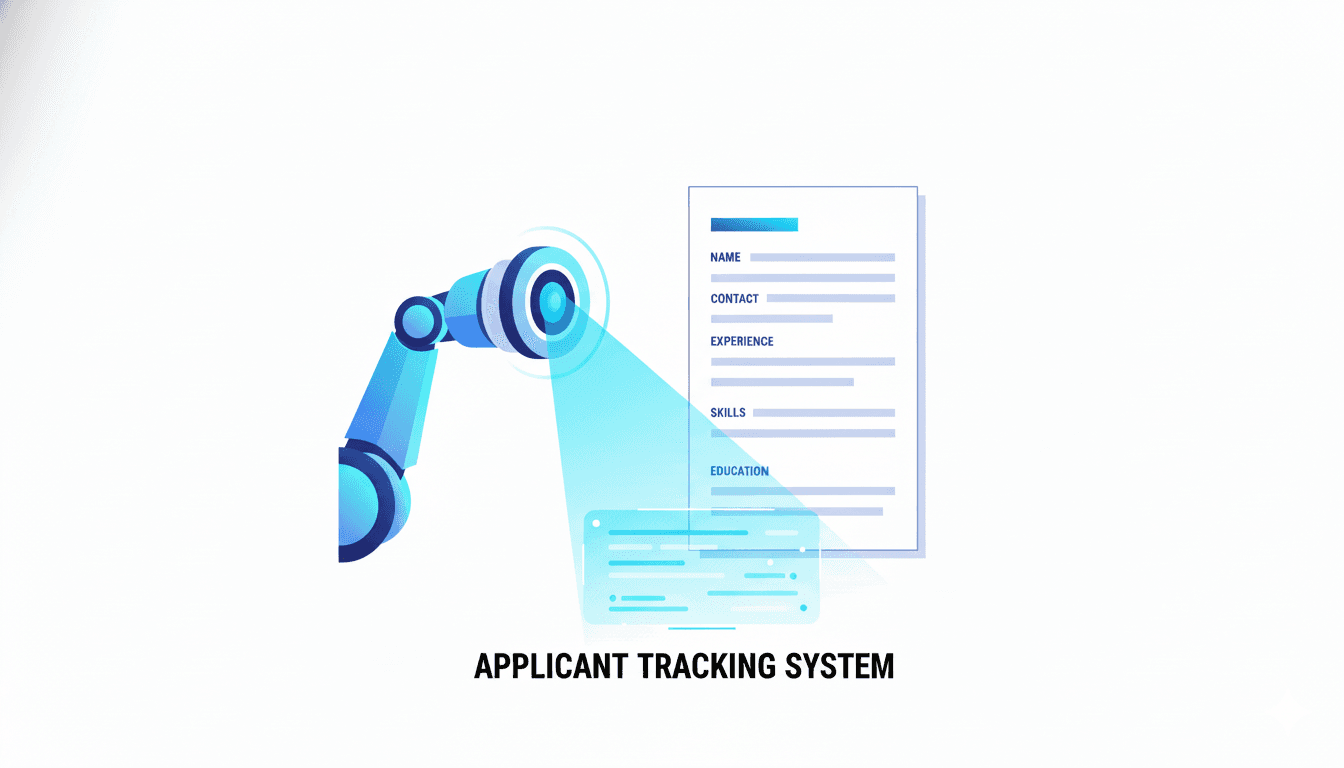
If you have applied for a job in the last five years, your resume has almost certainly encountered an Applicant Tracking System (ATS). But the ATS of 2026 is not the same software it was even a few years ago. Today, these systems are powered by sophisticated machine learning models that do far more than just scan for keywords. They rank, score, and even summarize your career history before a human being ever sees your name.
For many job seekers, the ATS feels like a "black hole" where resumes go to disappear. But it doesn't have to be that way. In this playbook, we will deconstruct how modern ATS platforms work and provide a step-by-step strategy for using AI resume builders to navigate them successfully. This is your guide to beating the bots and getting your foot in the door.
The State of Algorithmic Hiring in 2026
In 2026, the volume of job applications has reached an all-time high. Automation has made it easier than ever to apply for roles, leading to "application inflation." Companies that used to receive 200 resumes for a role now receive 2,000. To cope, they have turned to increasingly aggressive filtering.
From Keywords to Contextual Search
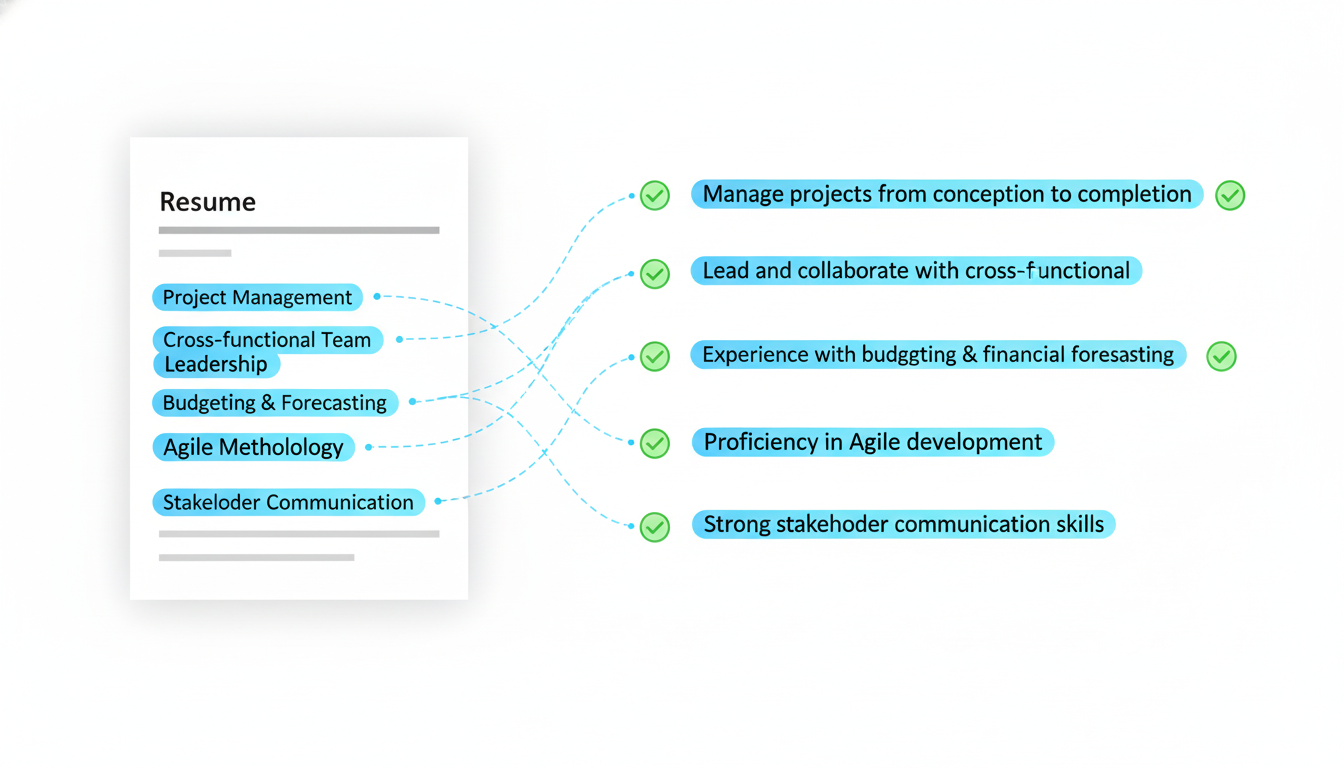
The old ATS looked for exact strings like "Python developer." The new ATS understands that if you have "Django," "Flask," and "Pandas" on your resume, you are likely a Python developer, even if you don't use that exact phrase. They use semantic search, which maps the relationship between skills and roles.
Predictive Performance Scoring
Some advanced ATS platforms now attempt to predict how well you will perform in a role based on your past trajectory. They look for patterns: how long you stayed at previous companies, the prestige of those organizations, and how quickly you were promoted. They assign a "potential" score that recruiters use to prioritize who they call first.
Automated Summarization
Recruiters don't have time to read 2,000 resumes. Modern systems use AI to generate a three-sentence summary of every applicant. If the summary doesn't immediately show that you meet the core requirements, the recruiter may never look at the full document.
Why Traditional Resumes Fail the 2026 ATS Test
Many of the "classic" resume tips are now actively harmful when it comes to ATS performance. Here is why traditional resumes often get rejected.
1. Complex Layouts and Graphics
Columns, text boxes, headers, and footers often confuse the "parser"—the part of the ATS that turns your PDF into a text file. When the parser fails, your data becomes a jumbled mess. If the ATS can't read your contact info or your most recent job title, you are effectively invisible.
2. Lack of Quantifiable Results
The 2026 ATS is programmed to look for numbers. It searches for percentage signs, dollar amounts, and timeframes. If your resume is just a list of "responsibilities" without "results," the algorithm will rank you lower than someone who has quantified their impact.
3. Generic Language
Using "corporate speak" or clichés like "team player" and "hard worker" doesn't help you with the ATS. The system is looking for hard skills and specific industry terminology. If your resume is too generic, it won't hit the semantic triggers the algorithm is searching for.
The AI Resume Builder Playbook: A 5-Step Strategy
To beat the ATS, you need to use the same technology it uses. Here is how to use an AI resume builder like CareerLyft to optimize your profile.
Step 1: The Semantic Audit
Start by pasting the job description into your AI builder. Don't just look for keywords; look for "competency clusters." If the job description mentions "client relationships," "account management," and "stakeholder engagement," the AI will identify this as a core cluster. You need to ensure your resume has multiple examples of this cluster, using varied but related terminology.
Step 2: Optimizing the Parser Flow
Use an ATS-certified template. In 2026, "minimalist" is better than "creative" for most roles. CareerLyft provides templates that are tested against all major ATS platforms (Workday, Taleo, Greenhouse, Lever). These templates ensure that your information is parsed in the correct order: Contact Info -> Summary -> Experience -> Education -> Skills.
Step 3: The "Achievement Injection"
For every job on your resume, use the AI to generate outcome-focused bullet points. The playbook for a high-scoring bullet point is: [Action Verb] + [Quantifiable Metric] + [Context/Method].
- ATS Low Score: "Responsible for improving website traffic."
- ATS High Score: "Boosted organic search traffic by 45% in 8 months through a comprehensive SEO audit and content strategy overhaul using Semrush."
The high-score version includes a verb, a metric, a timeframe, and a specific tool—all of which are signal-boosters for the ATS.
Step 4: The Skills Architecture
Modern ATS platforms weigh your skills based on where they appear. A skill mentioned in your "Experience" section carries more weight than one listed in a standalone "Skills" section. Your AI builder can help you weave your technical skills into your work history, ensuring they are seen as "applied" rather than just "claimed."
Step 5: The Final Match-Score Check
Before you apply, use the AI to give your resume a "match score" against the job description. Aim for a score of 85% or higher. If your score is lower, the AI will tell you exactly what is missing. Is it a specific software? A certain number of years of leadership? This allows you to fill the gaps before you hit 'Submit.'

Advanced Tactics for 2026
Once you have the basics down, you can use these advanced tactics to further increase your odds.
Use Standard Job Titles
If your official title at your current company is "Internal Happiness Architect" but you are actually an HR Manager, use "HR Manager" on your resume (or "HR Manager / Internal Happiness Architect"). The ATS is searching for standard titles, and an unconventional one could exclude you from relevant searches.
Avoid Tables and Columns
While they look good to humans, they are the number one cause of parsing errors. Stick to a single-column layout. If you must use columns, ensure they are created with tabs or alignment settings, not the "Table" feature.
Mind the File Type
While some systems claim to accept .docx files, PDF is still the safest bet in 2026. It preserves your formatting and ensures that the text remains selectable. However, make sure it's a "text-based" PDF, not an image scan of a document. Your AI builder will always export the correct format.
The Role of CareerLyft in Your ATS Strategy
CareerLyft was built with one goal: to get you past the initial screen as fast as possible. We keep our platform updated with the latest changes in ATS technology.
- Speed: You can create a tailored, ATS-ready version of your resume in under 20 seconds.
- Cost: We don't believe in subscriptions. Pay $1.99 to $4.99 only when you need it.
- Precision: Our AI is trained on the latest hiring data from 2025 and 2026, ensuring your keywords are current and relevant.

Beyond the ATS: The "Human Mirror" Test
Beating the ATS is only half the battle. Once the algorithm ranks you at the top, a human recruiter will look at your resume. This is where the "Human Mirror" test comes in.
Does your resume reflect a real person with a real story? Or does it look like it was written by a robot? A perfect ATS score won't help you if the recruiter finds your resume robotic or unbelievable. Use the AI to get the structure right, but use your own voice to add the nuance.
Checklist: Is Your Resume Ready for the 2026 ATS?
Run your resume through this final checklist before your next application.
- Format: Is it a single-column, text-based PDF?
- Contact Info: Is it in the body of the document (not in a header/footer)?
- Job Titles: Are they standard and recognizable for your industry?
- Dates: Are they in a consistent format (e.g., MM/YYYY)?
- Keywords: Does it include both the exact terms and semantic synonyms from the job description?
- Quantification: Does at least 50% of your bullet points include a number or metric?
- Match Score: Is it 85% or higher according to your AI builder?
Conclusion: Turning the Black Hole into a Gold Mine
The ATS is not your enemy; it's a filter. By understanding how that filter works and using an AI resume builder to align your experience with its requirements, you can stop being a victim of the algorithm and start using it to your advantage.
The job market in 2026 is data-driven. Your resume should be too. Take the guesswork out of your job search and start using a playbook that works.
Optimize your resume for the ATS with CareerLyft today.
Frequently Asked Questions
Can I use white text to hide keywords?
No. This is an old trick that modern ATS platforms can easily detect. If a system sees a mismatch between the text it "reads" and the text that is "visible," it will flag your resume for manual rejection or shadow-ban your profile.
Do I need to include my home address?
In 2026, most recruiters only need your City, State, and Zip Code to determine if you are in the right geographic area. For remote roles, you can omit the address entirely and just list your LinkedIn profile and portfolio link.
Should I include a photo on my resume?
For North American and UK markets, no. Most ATS platforms will either fail to parse the photo or the company will reject it to avoid bias/compliance issues. The only exception is if you are applying for a role in a country or industry where a headshot is a standard requirement.
How does CareerLyft stay updated with ATS changes?
Our engineering team regularly tests our output against the major ATS providers. We also analyze "hiring success" data to see which resume structures and keyword patterns are resulting in the most interviews in real-time.
What if the job description is poorly written?
AI can help here too. If a job description is vague, the AI can "extrapolate" the likely requirements based on the job title and industry, helping you build a resume that covers the bases even when the employer hasn't specified them.