

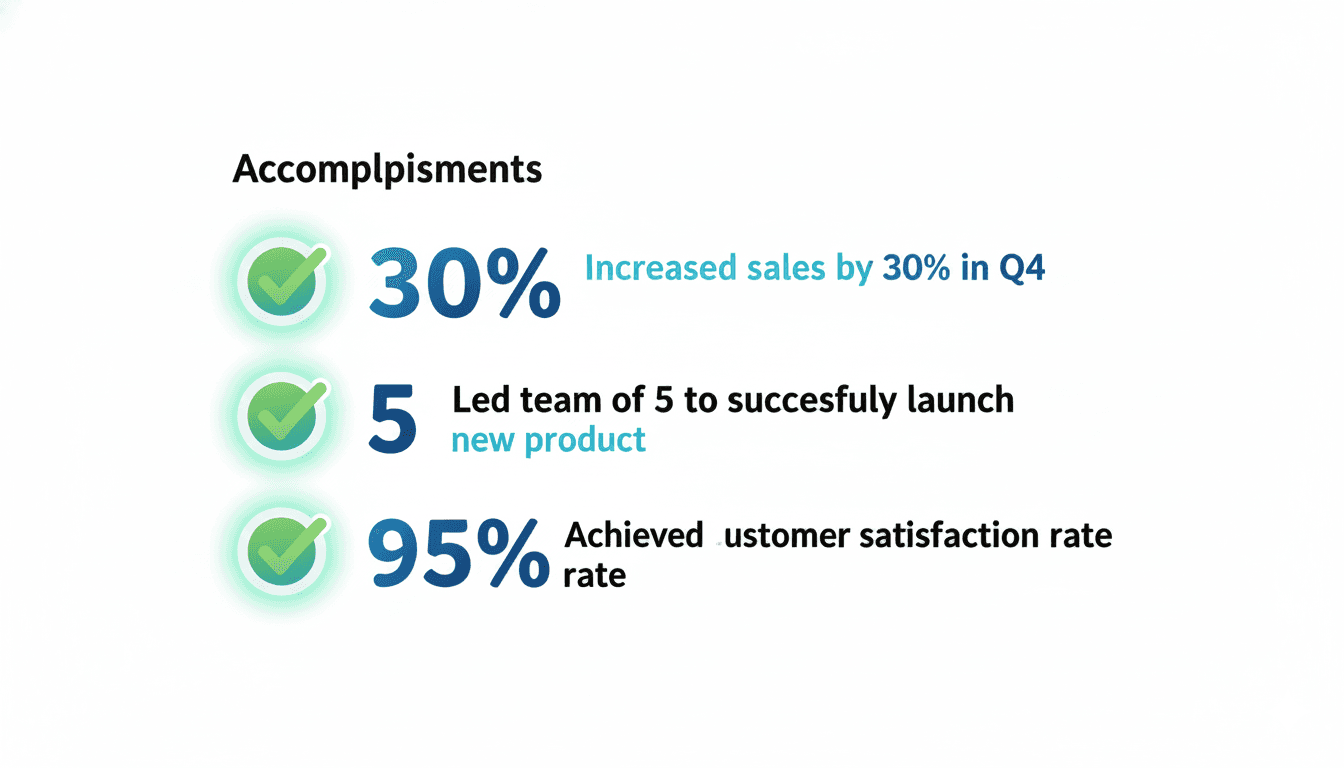
There is a single phrase that separates the resumes that get interviews from the ones that get ignored: "Show, don't tell."
In the competitive job market of 2026, recruiters are tired of reading the same generic phrases. They don't want to hear that you are a "hard worker" or a "motivated professional." They want to see the evidence. They want to know exactly how much money you saved, how many people you managed, and by what percentage you improved the process.
This is the era of the Data-Driven Resume. But for many people, finding the numbers in their work history feels impossible. "I'm not in sales," they say. "I don't have a quota."
The truth is that every job has data. You just need to know how to find it. In this guide, we'll show you how to use AI to "mine" your experience for metrics and how to format those metrics for maximum impact.
Part 1: Why Metrics are the Currency of 2026 Hiring
In 2026, the volume of applications is so high that human recruiters and AI filters are looking for "High-Signal" data points. A number is a high-signal data point because it is:
- Objective: It's harder to argue with a 20% increase than a "significant improvement."
- Comparative: It allows a recruiter to compare your performance against other candidates.
- Memorable: Humans are wired to remember specific details over vague generalizations.
If your resume is a list of responsibilities, you are describing a Job Description. If your resume is a list of quantified achievements, you are describing a Career.
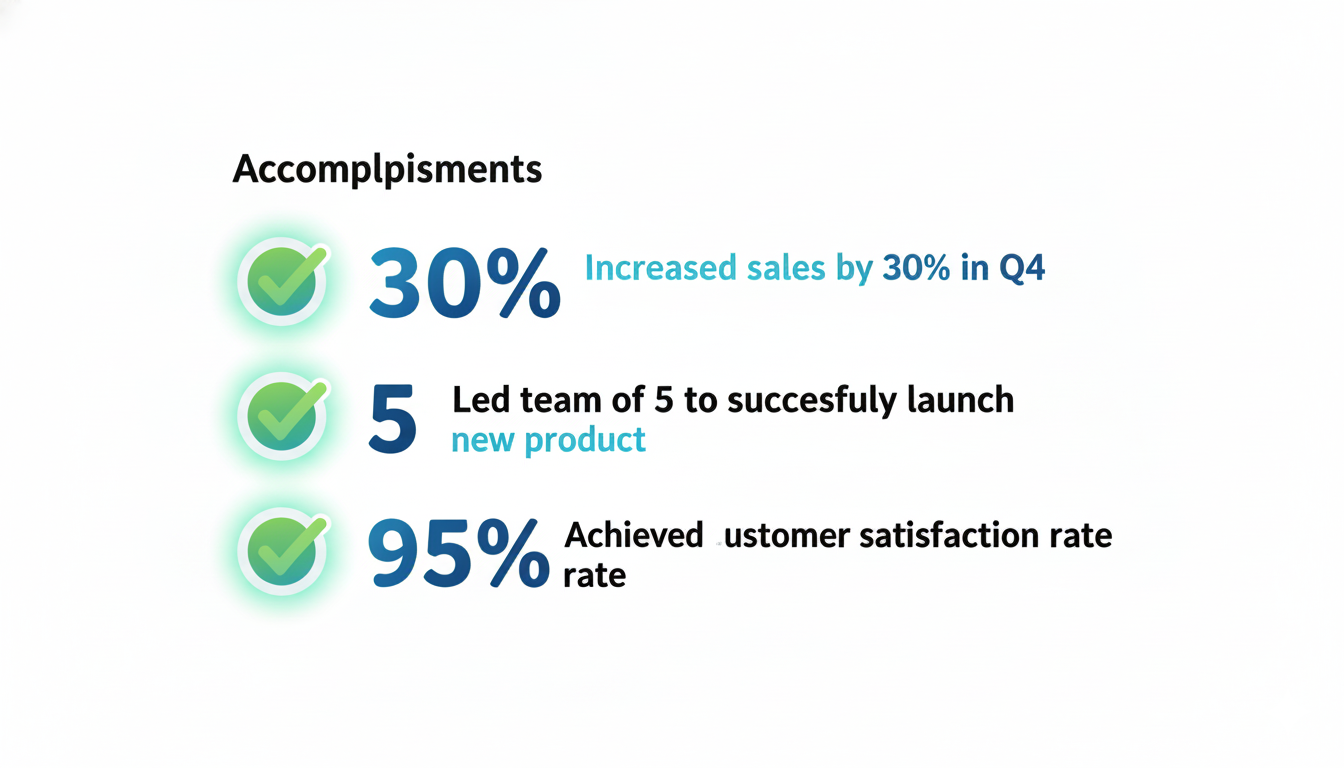
Part 2: The "Formula" for a High-Impact Bullet Point
Before we find the numbers, we need a structure to put them in. The most effective formula in 2026 is: [Strong Action Verb] + [Quantifiable Metric] + [Scope/Context] + [Method/Tool]
Let's look at an evolution:
- Level 1 (The Task): "Responsible for answering customer emails."
- Level 2 (The Outcome): "Improved customer response time."
- Level 3 (The Data-Driven Pro): "Reduced average customer response time by 45% across a queue of 500+ tickets weekly by implementing a new AI-driven ticketing system."
The Level 3 bullet point tells the recruiter:
- What you did (Reduced time).
- How well you did it (45% improvement).
- How big the problem was (500+ tickets).
- How you solved it (AI-driven system).
Part 3: How AI Helps You Find Your "Hidden" Metrics
Most people struggle to quantify their work because they are too close to it. An AI resume builder like CareerLyft acts as an "Achievement Detective." Here is how you can use AI to find your numbers.
The "Prompt and Extract" Technique
Instead of trying to think of a number, tell the AI what you did and ask it what the likely metrics would be.
User Prompt: "I was a Receptionist at a busy dental clinic. I handled a lot of calls and scheduling. How can I quantify this?"
AI Response:
"Even as a Receptionist, you were managing high-volume data. Think about these metrics:
- Volume: How many calls did you handle per day? (e.g., 50+ calls)
- Efficiency: Did you reduce wait times? (e.g., 'Reduced check-in time by 3 minutes')
- Financial: Did you handle billing or insurance? (e.g., 'Managed $10k in weekly billings with 99% accuracy')
- Retention: Did you manage a 'no-show' list? (e.g., 'Reduced appointment no-shows by 15% through a new SMS reminder protocol')"
By asking the AI for the categories of data, you can often trigger a memory of the specific numbers.

Part 4: The 5 Categories of Resume Metrics
If you're stuck, look for numbers in these five areas.
1. Money (Revenue and Savings)
This is the "Gold Standard" for business.
- Revenue: "Generated $500k in new business..."
- Savings: "Cut department software costs by $12k annually..."
- Budget: "Managed a $2M project budget with 0% overage..."
2. Time (Efficiency and Speed)
If you can't find money, find time.
- Speed: "Reduced report generation time from 5 days to 2 hours..."
- Frequency: "Produced 20+ high-quality content pieces monthly..."
- Deadlines: "Delivered 100% of projects on or ahead of schedule..."
3. People (Management and Influence)
Numbers that show your leadership and reach.
- Team Size: "Led a cross-functional team of 12..."
- Training: "Mentored 4 junior designers who were all promoted within 1 year..."
- Audience: "Managed a social media community of 50k+ followers..."
4. Quality (Accuracy and Satisfaction)
Numbers that prove you do the work well.
- Error Rate: "Maintained 99.9% data entry accuracy across 10k records..."
- Scores: "Achieved a 95% Customer Satisfaction (CSAT) score..."
- Rankings: "Ranked #1 out of 50 sales reps in the Northeast region..."
5. Scale (Volume and Scope)
Numbers that show the size of your world.
- Growth: "Scales the user base from 1k to 10k in 6 months..."
- Inventory: "Managed an inventory of 5,000+ SKUs..."
- Geographic: "Coordinated operations across 5 countries and 3 time zones..."
Part 5: Formatting Your Data for the Human Eye
Once you have your numbers, you need to make sure they "pop" off the page.
The Power of Digits
Always use digits ("25%") rather than writing the word ("twenty-five percent"). Digits are easier for the eye to scan and take up less space.
Use Bold Strategically
You can bold the most impressive numbers to ensure they are seen in that 6-second scan.
- "Increased organic web traffic by 140% over 12 months."
Use Ranges if You Aren't Sure
If you don't know the exact number, it is better to provide a conservative range than to omit it or guess wildly.
- "Managed a team of 10-15 freelancers..."

Part 6: What to Do if You Truly Have No Data
In some roles—like entry-level positions or highly creative fields—direct metrics can be hard to come by. In these cases, you should use "Frequency Metrics" and "Scope Metrics."
Frequency Metrics
Show your consistency.
- "Conducted daily stand-up meetings with the engineering team."
- "Published 3 investigative articles per week on local politics."
Scope Metrics
Show the complexity of your environment.
- "Collaborated with 8 different departments to streamline the onboarding process."
- "Researched over 200 potential leads for the business development team."
These numbers still provide a sense of scale and effort, even if they don't show a direct "result."
Part 7: Validating Your Data (The Ethics of Metrics)
In 2026, background checks have become more thorough. It is tempting to "inflate" your numbers to look more impressive, but this is a high-risk strategy.
- Be Prepared to Explain: If you say you "increased revenue by 20%," you should be able to explain the specific actions you took to achieve that in the interview.
- Own Your Portion: If you were part of a team that achieved a goal, say: "Contributed to a team initiative that..." rather than taking 100% of the credit.
- Keep a "Wins Folder": Start a document today where you record every positive outcome, every "thank you" email, and every quarterly report. This makes your next resume update 10 times easier.
Conclusion: Data is the Language of Hired Professionals
Your resume is a marketing document, and the best marketing is rooted in results. By moving away from vague duties and toward quantified achievements, you are signaling to recruiters that you are a professional who understands the "bottom line" of your industry.
You don't need to be a math genius to create a data-driven resume. You just need to look at your work through the lens of impact. With the help of AI tools like CareerLyft, you can uncover the metrics that have been hiding in your work history all along.
Turn your responsibilities into results. Use CareerLyft.ai to build your data-driven resume today.
The "Metric Mining" Checklist
- [ ] Does every job on my resume have at least one number?
- [ ] Did I use digits (10) instead of words (ten)?
- [ ] Are my most impressive metrics at the top of my bullet lists?
- [ ] Did I include a "Scope" metric to show the size of my environment?
- [ ] Can I explain the "How" behind every number I've listed?
Frequently Asked Questions
Is it okay to estimate my numbers?
Yes, as long as your estimates are "grounded in reality." If you handled "around 50 calls a day," saying "50+ calls" is a perfectly acceptable professional estimate. Avoid "round numbers" that look fake (e.g., exactly 1,000,000).
What if my company doesn't share data with me?
Look for "Proxy Metrics." If you don't know the exact revenue, look at the number of customers you served or the number of hours you saved your boss. These are still valuable data points.
Can a resume have too many numbers?
It is possible to make a resume look like a spreadsheet, which can be hard to read. Aim for 1-2 key metrics per bullet point. Ensure there is still a clear narrative of what you did and why it mattered.
How does CareerLyft help with metrics?
Our AI is trained to recognize the "metric-potential" of different job titles. When you write a bullet point, the AI will often flag it and say: "This looks like a great place for a metric! Could you estimate the time saved or the budget managed?" It acts as a proactive coach during the writing process.