

Once you have beaten the ATS (the machine), you face the final boss: the Human. A recruiter spends an average of 6 to 7 seconds scanning a resume before deciding to "Keep" or "Reject." In that fleeting window, they are not reading; they are recognizing patterns. This is the domain of psychology, visual hierarchy, and cognitive bias.
At CareerLyft.ai, we don't just build for bots; we design for brains. Our $1.99 resume builder leverages principles of cognitive science to ensure your resume engages the reader instantly.
The "F-Pattern" Scanning Behavior
Eye-tracking studies consistently show that recruiters read resumes in an "F-Pattern."
- They scan the top header (Name, Title).
- They scan down the left side (Company names, Dates).
- They read across specifically for bolded keywords or bullet points that catch their eye.
If your key achievements are buried in the middle of a dense paragraph on the right side of the page, they are invisible. CareerLyft templates enforce a layout that aligns your strongest content with this natural gaze path.
Cognitive Load and White Space
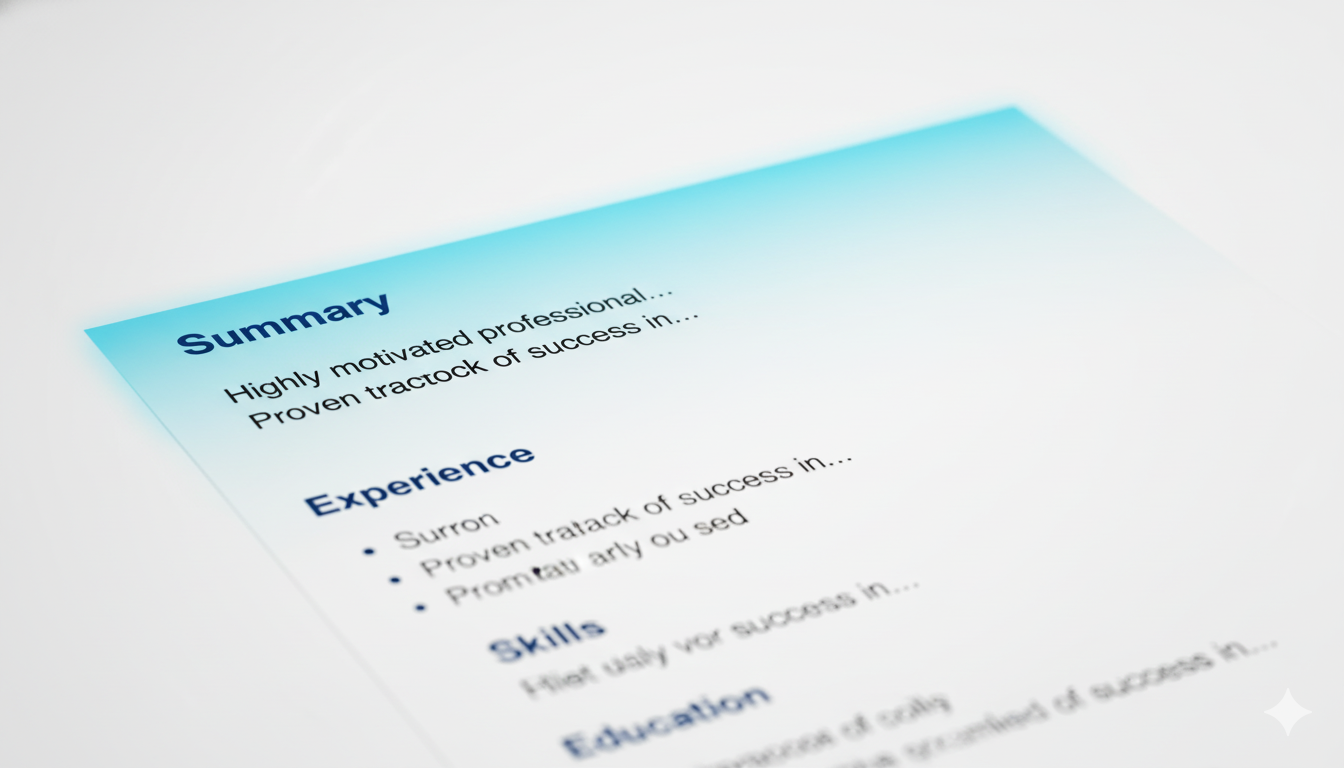
"Cognitive Load" is the amount of mental effort required to process information. A cluttered, wall-of-text resume creates high cognitive load. The recruiter's brain subconsciously resists reading it. Effective design uses "White Space" (negative space) to let the content breathe. It signals confidence. It says, "I don't need to shout; my results speak for themselves."
Our builder automatically balances text density with margins and padding, ensuring a "clean" look that invites reading rather than repelling it.
The Primacy and Recency Effect
Psychology tells us people remember the first thing they see (Primacy) and the last thing they see (Recency).
- Primacy: This is your Professional Summary. It must be a hook. "Marketing Manager with 10 years experience" is boring. "Award-winning Brand Strategist who scaled revenue by 200%" is a hook.
- Recency: This is often your Skills section or Education at the bottom. It should reinforce the narrative started at the top.
Social Proof and Authority
Humans are social animals; we look for signals of status.
- Brand Association: Working for known companies.
- Quantification: Numbers act as "truth signals." "Improved efficiency" is an opinion. "Reduced latency by 40ms" is a fact.
- Links: Including a link to a portfolio or LinkedIn profile signals transparency and confidence.
The Halo Effect
The "Halo Effect" occurs when one positive trait (like a professional, aesthetically pleasing layout) influences the perceiver to assume other positive traits (like competence, attention to detail, and organization). A messy resume implies a messy worker. A structured, elegant resume implies a structured, elegant thinker.
Conclusion: Design is Function
Your resume is your user interface. If the UX is bad, the user (recruiter) bounces. You are the product, and the resume is the landing page. For $1.99, CareerLyft.ai ensures your landing page converts. We handle the psychology of design so you can focus on the content of your character.