

In the early days of digital hiring, "keyword optimization" was simple: if a job description asked for "Salesforce," you typed "Salesforce" on your resume as many times as possible. This was the era of "keyword stuffing," and it was remarkably easy to game the system.
But in 2026, the game has changed. Recruiters and Applicant Tracking Systems (ATS) have become incredibly sophisticated. They no longer look for simple string matches; they use advanced Natural Language Processing (NLP) and semantic search to understand the meaning and context of your experience.
If you want to get hired in 2026, you need to understand the science of resume keywords. In this guide, we will pull back the curtain on how AI resume builders like CareerLyft optimize your profile to satisfy both the algorithms and the human recruiters who follow them.
Part 1: From String Matching to Semantic Search
To understand the science of 2026, we first have to understand the technology that drives it.
The Old Way: Boolean Search and String Matching
The "Old Way" treated your resume like a simple text file. A recruiter would search for "Project Manager" AND "Agile". If those exact words weren't there, you were invisible. This led to "Boolean gaming," where candidates would list every possible variation of a word in a tiny, white font at the bottom of their resume.
The New Way: Semantic Search
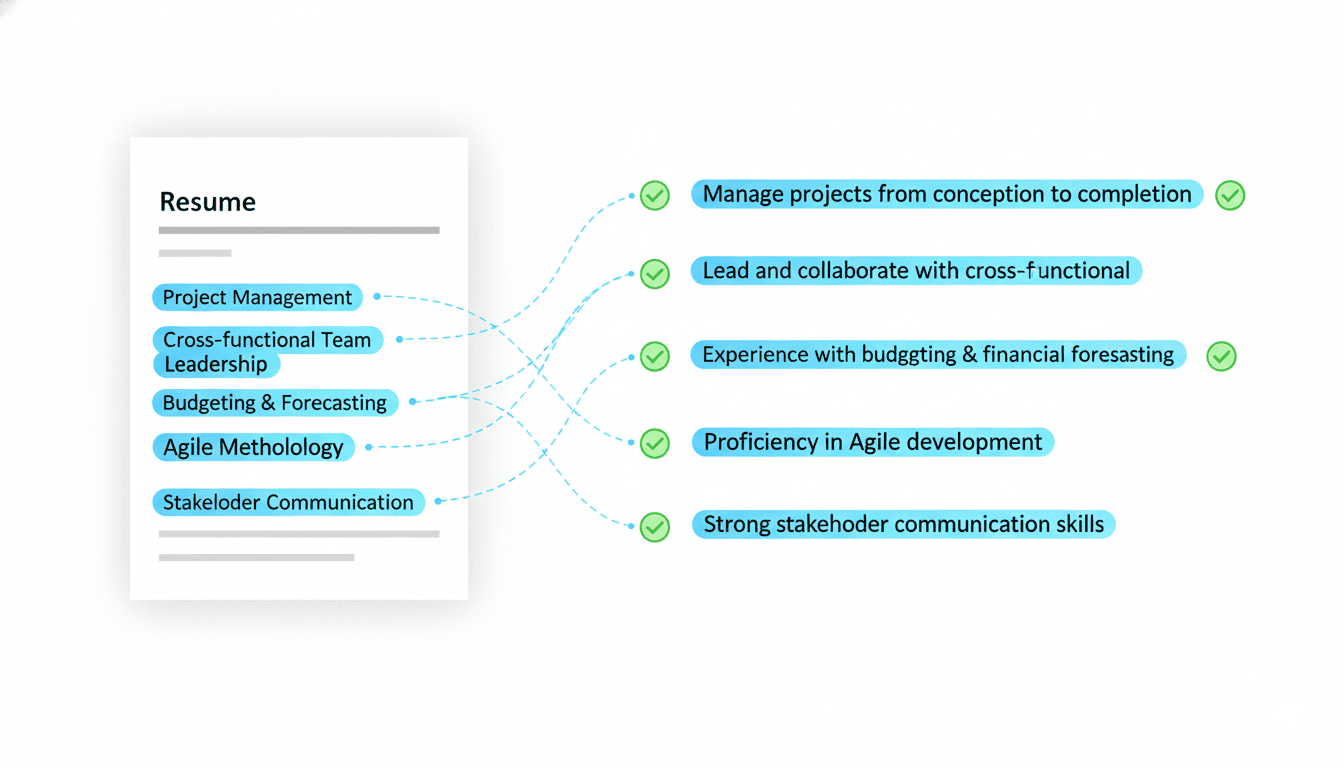
Modern systems use Semantic Search. This technology uses "vector embeddings"—mathematical representations of words that group related concepts together.
In a semantic search system:
- "Python" is mathematically close to "Django," "Flask," and "Backend Development."
- "Leadership" is close to "Team Management," "Strategic Planning," and "Direct Reports."
This means the ATS now understands that if you managed a team of 50 people, you have leadership skills, even if you never use the word "leadership."

Part 2: The Core Technologies of AI Optimization
AI resume builders use several specific technologies to help you "speak" the language of the ATS.
1. Natural Language Processing (NLP)
NLP is the branch of AI that helps computers understand human language. In a resume builder, NLP is used to:
- Extract Entities: Identify which words in a job description are "skills," which are "tools," and which are "outcomes."
- Analyze Sentiment: Ensure the tone of your resume matches the professional requirements of the role.
- Identify Action Verbs: Ensure your experience is described using the high-impact verbs that recruiters respond to (e.g., "Orchestrated" vs. "Did").
2. TF-IDF (Term Frequency-Inverse Document Frequency)
This is a statistical measure used to evaluate how important a word is to a document in a collection.
- Term Frequency (TF): How often a word appears in a job description.
- Inverse Document Frequency (IDF): How "unique" that word is across all job descriptions in that industry.
AI builders use TF-IDF to identify the "Critical Keywords"—the words that aren't just common, but are highly specific to the role you want.
3. Competency Mapping
Advanced builders like CareerLyft use Competency Mapping. Instead of just looking for keywords, the AI identifies the underlying competencies required for a role. For a Product Manager, those might include "Prioritization," "Empathy," and "Technical Literacy." The AI then looks for evidence of these competencies throughout your work history.
Part 3: Why "Keyword Density" is a Myth in 2026
You will still see "experts" telling you that you need a keyword density of 3-5%. In 2026, this is bad advice.
Modern ATS platforms are trained to detect and penalize keyword stuffing. They look for "Natural Language Flow." If you use the word "Project Management" in every single bullet point, the algorithm flags your resume as "Low Quality" or "Manipulative."
The "Contextual Placement" Strategy
Instead of density, AI builders focus on Placement. A keyword carries different "weight" depending on where it appears:
- High Weight: Job Titles, Summary, and the first 3 bullet points of your most recent role.
- Medium Weight: Skills section and older work history.
- Low Weight: Education and Certifications.
The goal is to show the keyword in action.
- Bad: "Skills: SQL, Data Analysis, Tableau."
- Good: "Used SQL to extract 1M+ records, performing a Data Analysis that was visualized in Tableau for the executive team."
Part 4: How CareerLyft Automates the Science
We built CareerLyft to do the "math" of resume writing for you. Our AI performs a three-step optimization process for every resume.
Step 1: The Job Description "Deconstruction"
When you paste a job description, our NLP engine identifies the "Primary," "Secondary," and "Implicit" keywords.
- Primary: Explicitly required skills (e.g., "5 years of Java").
- Secondary: Preferred skills (e.g., "Experience with AWS is a plus").
- Implicit: Skills that are implied by the nature of the role (e.g., a "Sales" role implies "Negotiation" and "CRM Usage").
Step 2: The Semantic Alignment
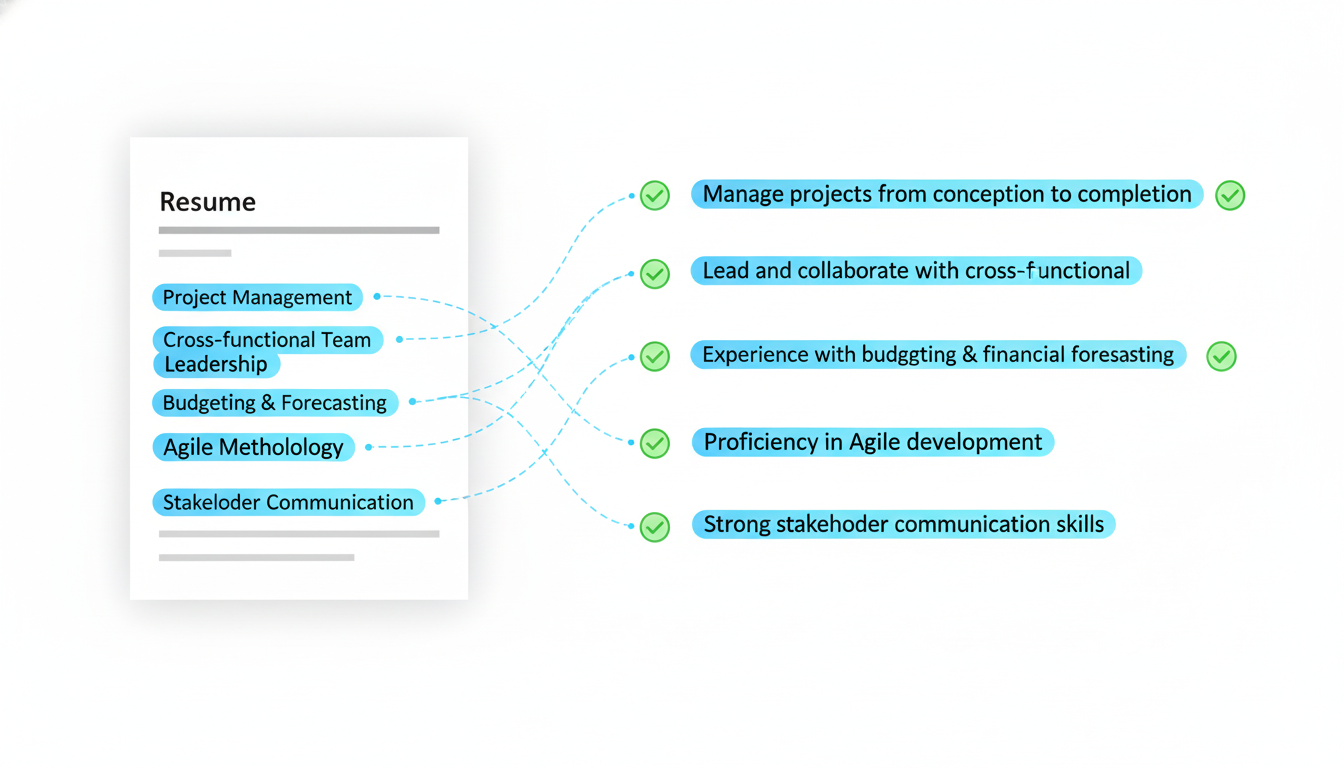
The AI then looks at your Master Resume and identifies where your experience matches these clusters. It suggests the exact phrasing that will trigger the semantic match.
Step 3: The Match-Score Validation
Finally, the AI calculates a "Match Score." This isn't just a count of keywords; it's a measure of how well your career narrative aligns with the hiring intent of the employer.
Part 5: The "Hidden" Keywords of 2026
In 2026, there is a new class of keywords that recruiters are searching for. These aren't technical skills, but "Soft Skill Signals."
1. AI Literacy
Regardless of the role, companies want to know you can use AI tools. Keywords like "AI Prompting," "Workflow Automation," and "LLM Integration" are huge value-adders in the current market.
2. Hybrid/Remote Competency
As the world has settled into a hybrid model, keywords like "Async Communication," "Distributed Team Leadership," and "Virtual Stakeholder Management" have become essential.
3. Data Fluency
Every role is now a data role. Recruiters are looking for keywords like "KPI Tracking," "Data-Driven Decision Making," and "A/B Testing."
Part 6: Practical Tips for Scientific Optimization
- Mirror the Job Title: If the job is for a "Senior Account Executive" and you are an "Account Manager," use the AI to frame your experience as "Senior-level Account Management."
- Use Industry-Standard Acronyms: Use both the full name and the acronym (e.g., "Search Engine Optimization (SEO)"). Modern ATS can handle both, but listing both ensures you hit every possible search variation.
- Focus on "Hard" over "Soft" Keywords: While soft skills are important, they are hard for an algorithm to verify. Use your resume to highlight "Hard" skills (tools, methods, outcomes) and save the "Soft" skills for your summary and cover letter.
- Avoid Jargon: Unless it's an industry-standard term, avoid internal company jargon. If your old company called sales "Revenue Inbound Events," use "Sales" or "Business Development" on your resume.

Part 7: The Human Element: Writing for the "6-Second Scan"
Even if you have a perfect 100% ATS match, you still have to pass the human test. Recruiters spend an average of 6 seconds on their first scan.
The "Scientific" resume must also be a "Visual" resume.
- Use White Space: Don't crowd your text.
- Use Bold Strategically: Bold the keywords you want the recruiter's eye to catch.
- Keep Bullets Short: No more than 2 lines per bullet point.
Conclusion: Mastering the Algorithm
In 2026, your resume is a data set. To get it in front of a human, you must first optimize it for the algorithms that rule the modern hiring landscape.
But remember: optimization is not about tricking the system. It's about clarity. It's about using the science of AI to ensure that your true value is translated into a language that the world's most sophisticated hiring tools can understand.
Don't leave your career success to chance. Use the science of CareerLyft to build a resume that ranks, resonates, and results in more interviews.
Start your scientific optimization with CareerLyft.ai today.
Frequently Asked Questions
What is a "Match Score" and what score should I aim for?
A Match Score is an AI-generated estimate of how well your resume matches a specific job description. At CareerLyft, we recommend aiming for a score of 85% or higher. A 100% score can sometimes look "too perfect" and trigger manual reviews for keyword stuffing.
Does the order of my skills matter?
Yes. Both humans and algorithms give more "weight" to the skills listed first. Always list your most relevant and high-demand skills at the top of your skills section and within the summary.
Can I use the same keywords on my LinkedIn profile?
Yes! In fact, you should. Your LinkedIn profile acts as a passive resume that recruiters use to find you through search. Using the same optimized keywords from your CareerLyft resume will help you appear in more "Headhunter" searches.
Is TF-IDF used in all ATS platforms?
While not every system uses the exact TF-IDF algorithm, almost all modern platforms (Workday, Greenhouse, etc.) use a variation of it to determine the relevance of a candidate to a specific role.