


Changing careers used to be a once-in-a-lifetime event, often triggered by a mid-life crisis or a major economic downturn. In 2026, however, the career pivot is a standard feature of the professional landscape. With the rapid evolution of technology, entire industries are being born and dying in the span of a few years. Professionals are no longer expected to stay in one lane for 40 years; they are expected to be "agile learners" who can reinvent themselves every decade.
But while the concept of changing careers has become accepted, the execution remains incredibly difficult. The primary barrier is the "Experience Paradox": you can't get a job in a new field without experience, but you can't get experience without a job.
This is where the AI resume builder becomes a game-changer. It is the bridge that allows you to translate your past achievements into a future-facing narrative that recruiters in your target industry will understand and value. In this 2,500+ word guide, we will break down the exact process of using AI to pivot your career, from initial skill mapping to acing the interview in a brand-new field.
Part 1: The Psychology of the Career Pivot in 2026
Before we look at the resume mechanics, we must understand how hiring has changed. In the "old world," recruiters looked for a 100% match in job titles. If they were hiring a "Project Manager," they only looked at resumes that said "Project Manager."
In 2026, savvy recruiters have shifted toward "Skills-Based Hiring." They realize that a high-performing teacher has many of the same core competencies as a high-performing Corporate Trainer or a Project Manager. They are looking for evidence of success in solving specific types of problems, regardless of the industry where those problems were solved.
The Translation Problem
The reason most career-change resumes fail is not a lack of talent; it's a "translation error." You might be a master of "classroom management," but a corporate recruiter is looking for "stakeholder engagement" and "resource optimization." You are saying the same thing in a different language.
AI is the world's best translator for professional experience. It can take your "teacher-speak" and turn it into "corporate-speak" in seconds, without losing the truth of what you achieved.

Part 2: Mapping Your Transferable Skills with AI
The foundation of your new resume is your "Transferable Skill Set." These are the skills that remain valuable regardless of the context.
Step 1: The Raw Data Dump
Start by using an AI resume builder like CareerLyft to create a "Master Resume" of your current career. Don't worry about the target job yet. Just list every project, every responsibility, and every outcome you've ever had.
Step 2: The Target Role Decomposition
Next, find 3 to 5 job descriptions for your target role. Paste them into the AI's analysis tool. The AI will identify the "Core Clusters" of the new role. For a transition into Data Analytics, those clusters might be:
- Data Visualization (Tableau, PowerBI)
- Statistical Analysis (SQL, Python)
- Business Storytelling (Presenting insights to stakeholders)
- Process Automation
Step 3: The AI-Driven Skill Gap Analysis
Ask the AI: "Based on my Master Resume and these target job descriptions, which of my current skills are the most transferable?"
The AI might respond:
"In your role as a Retail Manager, your 'Inventory Optimization' and 'Staff Scheduling' are direct precursors to the 'Resource Planning' and 'Operational Efficiency' required in Project Management. Your experience managing a $2M budget is a direct match for 'Financial Oversight'."
This analysis gives you the "Hook" for your new resume. You aren't a Retail Manager trying to be a Project Manager; you are a Resource and Budget Specialist with a track record of $2M P&L management.
Part 3: Building the "Bridge" Resume
For a career changer, the standard "Reverse Chronological" resume can be a trap. It highlights your old job titles right at the top, which can cause a recruiter to stop reading. Instead, you need a Hybrid/Combination Resume.
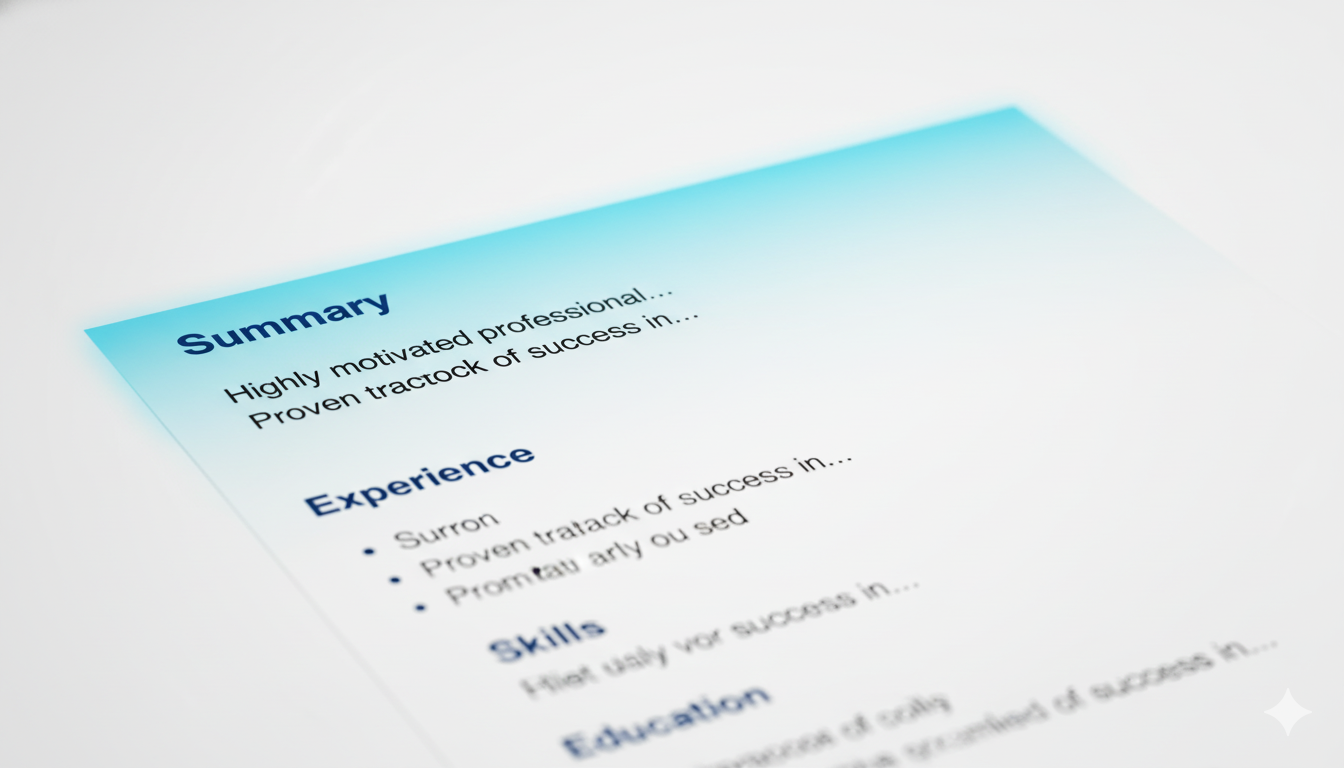
The Summary: Your Career Pivot Statement
Your summary is the most important 50 words on your resume. It must address the elephant in the room (the career change) and immediately pivot to your value.
- Weak Summary: "Retail Manager looking to transition into Project Management. Hard worker and fast learner."
- AI-Optimized "Bridge" Summary: "Strategic Operations Leader with 8+ years of experience in high-volume resource optimization and $2M+ budget management. Expert in cross-functional stakeholder alignment and process automation. Transitioning deep operational expertise into Project Management roles within the Tech sector."
Notice how the second summary uses the language of the new role to describe the old experience.
The Skills Section: The Semantic Buffer
Place a "Core Competencies" or "Technical Skills" section immediately after your summary. This acts as a buffer. It ensures the first thing the recruiter (and the ATS) sees is a list of relevant keywords, not your old job titles.
Part 4: Using AI to "Translate" Your Work History
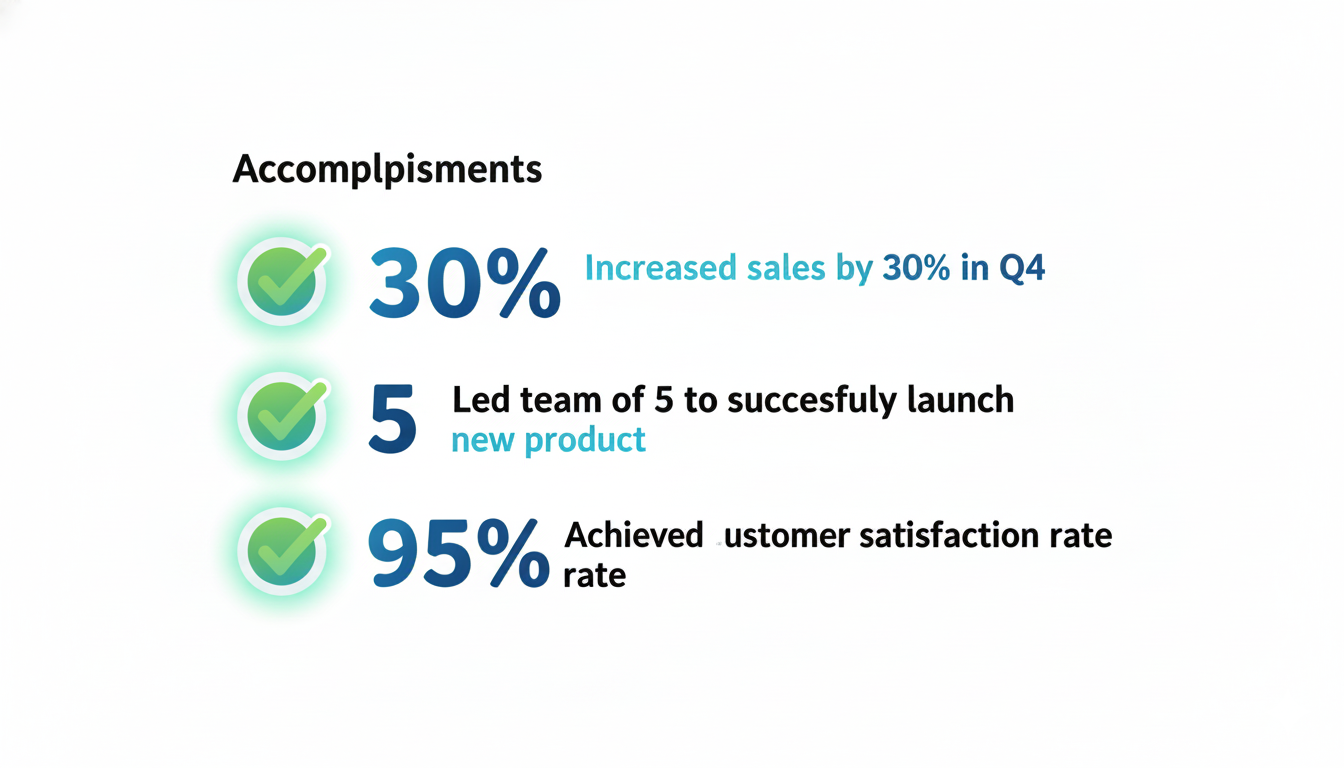
This is where the magic happens. You need to rewrite your bullet points so they emphasize the how and the result, rather than the industry-specific what.
The AI Prompting Strategy
When using an AI builder like CareerLyft, use this prompting strategy for each of your old roles: "Rewrite my experience as a High School Teacher to highlight transferable skills for a Customer Success Manager role. Focus on empathy, conflict resolution, training, and data-driven student (client) outcomes."
Before vs. After (Teacher to CSM)
- Before (Teacher): "Graded 150 papers weekly and managed a classroom of 30 students. Conducted parent-teacher conferences twice a year."
- After (CSM): "Managed a high-volume 'account load' of 150+ stakeholders, delivering consistent feedback and data-driven progress reports. Orchestrated quarterly 'business reviews' with key stakeholders (parents) to align on performance goals and retention strategies."
Both statements are true. But the second one uses the vocabulary of a Customer Success Manager. It signals to the recruiter that you already understand their world.
Part 5: Overcoming the "No Experience" Barrier with Projects
If you are moving into a technical field, AI-translated bullets might not be enough. You need proof of your new skills. This is where the "Projects" section comes in.
Creating "Synthetic Experience"
In 2026, you don't need a job to get experience. You can create "Synthetic Experience" through:
- Open Source Contributions: Contributing to a project on GitHub.
- Freelance/Pro-Bono Work: Helping a non-profit with their marketing or accounting.
- AI-Generated Case Studies: Taking a raw data set and creating a full analysis report.
Formatting Projects for the Resume
Treat your projects exactly like a job. Use an AI resume builder to format them with a title, a timeframe, and 3-4 achievement-oriented bullet points.
- Project Title: "E-commerce Data Optimization Initiative (Independent Project)"
- Bullet 1: "Cleaned and analyzed a data set of 50,000 transactions using Python and SQL."
- Bullet 2: "Developed a Tableau dashboard that identified a 12% leakage in the checkout funnel."
- Bullet 3: "Proposed a re-segmentation strategy that increased hypothetical ROI by 8%."
This shows the recruiter that you aren't just talking about changing careers; you've already started doing the work.
Part 6: Beating the ATS in a New Industry
The ATS is your biggest enemy in a career transition. Because these systems are programmed to look for "patterns of success" in a specific industry, your "non-traditional" background can flag you as a "Low Match."
The "Keyword Injection" Technique
Use your AI resume builder to perform a "Gap Analysis" for every job you apply to.
- Identify 3-4 keywords in the job description that you don't have on your resume.
- Find an experience in your past where you used a related skill.
- Use the AI to rewrite that experience using the exact keyword from the job description.
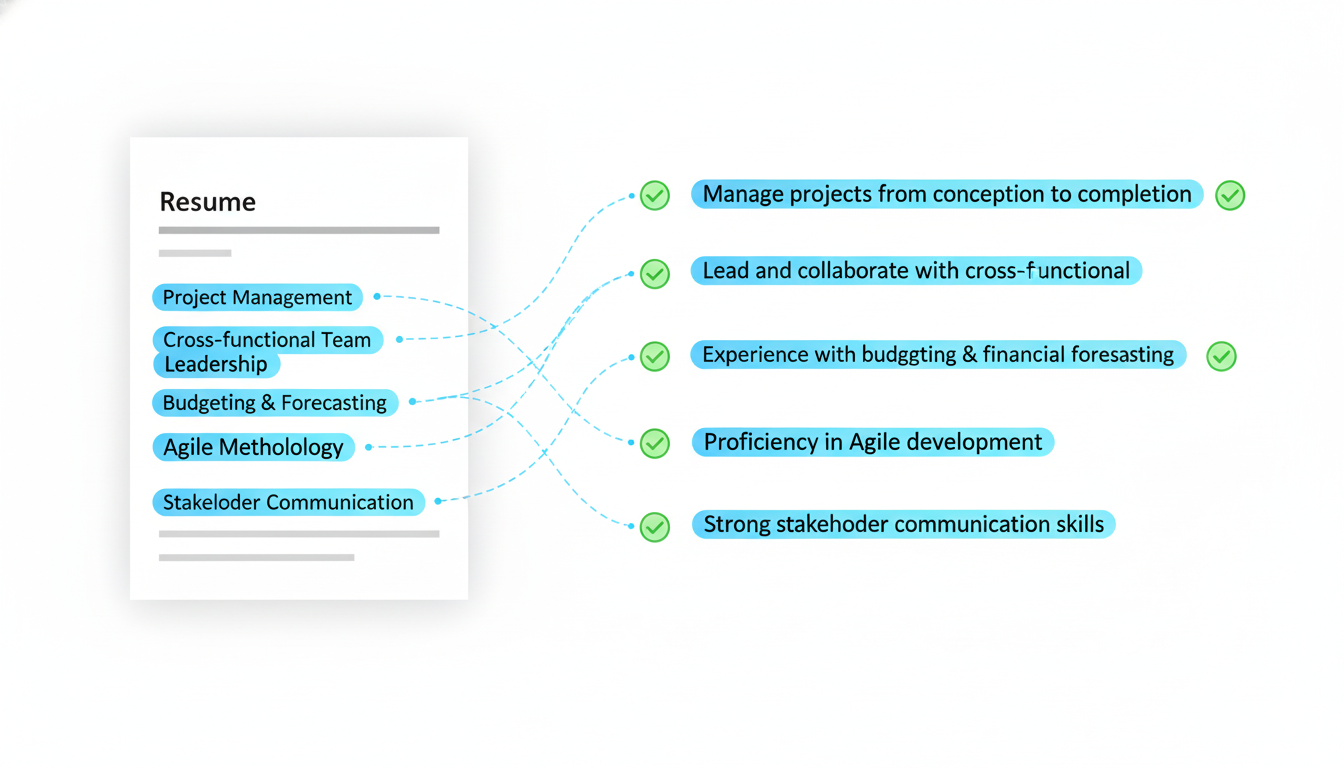
Example: If the job asks for "Agile Methodology" and you've never worked in a tech office, look at your time as a Kitchen Manager.
- The Logic: A busy kitchen uses "Scrum-like" standups, "Sprint-like" shifts, and "Kanban-like" order boards.
- The Rewrite: "Implemented an Agile-inspired workflow for daily operations, utilizing 'standup' meetings to reduce prep-time waste by 20%."
This is not lying; it is contextual mapping. You are showing the ATS that you have the underlying competency it's looking for.
Part 7: The Career Changer's Cover Letter
While many people ignore cover letters, they are mandatory for career changers. The resume shows what you can do; the cover letter explains why you are making the switch.
The "Why Me, Why Now" Framework
Use AI to draft a cover letter based on this three-part framework:
- The Connection: "I've spent 10 years in Healthcare, but I've always been the person who built the spreadsheets that made the department run. I've realized my true impact is in the data, not the delivery."
- The Proof: "I've spent the last 6 months mastering SQL and Python, and I've used those skills to automate the reporting for my current clinic, saving 10 hours a week."
- The Value: "I'm not just a data analyst; I'm a data analyst who understands the life-or-death stakes of medical data. I bring a level of precision and urgency that a traditional analyst might lack."
This narrative turns your "lack of experience" into a "unique competitive advantage."
Part 8: Networking in the Age of AI
In a career transition, 80% of your success will come from people, not portals. However, AI can help you scale your networking efforts.
AI-Powered LinkedIn Outreach
Don't send generic connection requests. Use AI to generate personalized outreach messages based on someone's LinkedIn profile.
- The Prompt: "Write a 50-word LinkedIn message to a Senior Data Analyst at Google. I'm a former Teacher transitioning into Data, and I want to ask for 15 minutes to learn about how they use storytelling in their reports."
- The Result: "Hi [Name], I'm a former Educator moving into the Data space. I've been following your work on [Topic], and I'm fascinated by how you bridge the gap between complex metrics and stakeholder narratives. Would you be open to a 15-minute chat about your approach? I'd love to learn from your journey."
Managing the "Referral Engine"
In 2026, a referral is the only guaranteed way to bypass the ATS. Use your AI resume builder to create a "Referral Cheat Sheet"—a one-page document you can send to friends that says: "Here are the 3 roles I'm looking for, and here are the 3 talking points that explain why my background in [Old Field] makes me a great fit for [New Field]."
Part 9: Common Mistakes to Avoid
- Apologizing for your past: Don't say "I know I don't have experience in X." Instead, say "My 10 years in Y have given me a unique perspective on X that most candidates lack."
- Using an old LinkedIn photo: In 2026, your "brand" must match your new industry. If you're moving from a creative field to a corporate one, you need a professional headshot. (Hint: CareerLyft's AI Headshot generator can do this in minutes).
- Not updating your "Skills" on LinkedIn: The LinkedIn algorithm is its own type of ATS. If your skills still say "Classroom Management," you won't appear in "Product Manager" searches.
- Inconsistent messaging: Ensure your resume, LinkedIn, and cover letter all tell the same "Bridge" story.
Part 10: Conclusion—The Future belongs to the Agile
The professionals who thrive in 2026 are not the ones who stay in one job forever. They are the ones who know how to reinvent themselves.
A career transition is a daunting task, but you don't have to do it alone. By leveraging the power of an AI resume builder like CareerLyft, you can remove the "friction" of the job search. You can translate your experience, beat the bots, and present yourself as a high-value candidate in a brand-new world.
Remember: Your past is not a weight that holds you back; it is the foundation you build your future on. You just need the right tools to show the world what you've built.
Ready to start your next chapter? Build your career-transition resume with CareerLyft.ai today.
Career Transition Checklist
- [ ] Created a "Master Resume" with every achievement.
- [ ] Analyzed 5 target job descriptions for keyword clusters.
- [ ] Written an "AI-Optimized Bridge Summary."
- [ ] Translated all work history bullets into the "new language."
- [ ] Added 2-3 "Synthetic Experience" projects.
- [ ] Verified ATS Match Score is above 85%.
- [ ] Updated LinkedIn profile photo and skills to match the new industry.
- [ ] Drafted a "Why Me, Why Now" cover letter.
Frequently Asked Questions
Can AI really help me if I'm switching from a blue-collar to a white-collar job?
Yes. AI is incredibly effective at identifying "Transferable Soft Skills" like leadership, safety compliance (which translates to risk management), logistics, and team coordination. It helps bridge the cultural gap in professional language.
Is CareerLyft better for career changers than other builders?
We believe so. Because CareerLyft focuses on "Semantic Mapping," we are better at finding the underlying connections between unrelated industries than builders that only look for exact keyword matches. Plus, our one-time payment model is ideal for people in transition who are watching their budget.
How long does a career transition usually take in 2026?
With a focused AI-driven strategy, most career changers find a new role within 3 to 6 months. Without a strategy, it can take over a year. The difference is in the quality and speed of your "translation."
Should I take a pay cut to change careers?
Not necessarily. In 2026, many career changers make "lateral" moves where their salary stays the same because their unique background adds a level of value that "traditional" candidates don't have.